Friday morning arrived cold and gray.
Ohio seemed caught between summer and autumn, with wet leaves pressed against the pavement and a sharp chill slipping beneath my office window.
At 9:12, my phone vibrated.
The certified-mail notification appeared.
DELIVERED.
SIGNED BY: MARGARET BENNETT.
I stared at the screen.
I didn't feel victorious.
Mostly, I felt exhausted.
The agreement wasn't an eviction notice.
It gave Mom ninety days to begin contributing to the household expenses or find another living arrangement.
For the first time in six years, the arrangement between us existed on paper.
Twenty-three minutes later, my phone erupted.
Call after call.
Message after message.
Then Ethan.
“Please tell me you're sitting down.”
“I'm working.”
“She thinks you're putting her out.”
“I gave her ninety days.”
“I know.”
He exhaled.
“She isn't hearing that part.”
I closed my eyes.
“I'll come after work.”
“No.”
His voice was quiet.
“Come now.”
I picked up my keys.
Three cars were already outside when I reached Mom's house.
Aunt Linda.
Uncle Robert.
Ethan.
I parked behind them and sat in my car for several seconds.
Then I walked to the front door.
It opened before I knocked.
“There she is,” Mom said.
“The landlord.”
I stepped inside.
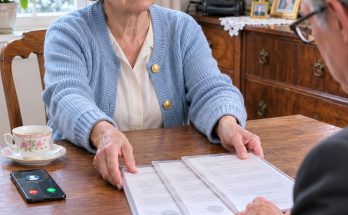
The certified envelope lay ripped open on the dining table.
Mom was dressed carefully, pearls around her neck and a cream sweater buttoned to the collar.
“You're evicting your own mother.”
“I gave you ninety days.”
“You're taking my home.”
“No.”
I kept my voice even.
“I'm asking you to help support a home I've been paying for.”
Aunt Linda looked at Mom.
“Is Claire really paying everything?”
Mom answered immediately.
“She offered.”
“I did,” I said.
Mom turned toward me.
“And gifts don't come with conditions.”
“You're right.”
For one brief second, she seemed satisfied.
Then I finished.
“But gifts aren't permanent contracts.”
Her expression hardened.
I reached into my bag.
The folder landed on the table with a quiet thud.
Inside were six years of financial records.
Mortgage statements.
Insurance payments.
Property taxes.
Utility bills.
Roof repairs.
The furnace.
Kitchen work.
Landscaping.
Housekeeping.
Grocery transfers.
Everything.
Uncle Robert opened the folder.
He turned one page.
Then another.
“My God.”
Aunt Linda leaned closer.
“You paid for the roof?”
“Yes.”
“The furnace?”
“Yes.”
“The kitchen?”
“Yes.”
Mom folded her arms.
“She wanted me to have a nice house.”
I looked at her.
“I wanted my mother to feel safe.”
No one spoke.
The distinction sat between us.
Mom had treated my generosity as proof that she deserved whatever I could provide.
I had treated it as an expression of love.
Somewhere along the way, those two meanings had become impossible to separate.
Then Ethan spoke.
“There’s something else.”
Mom's head turned sharply.
“Ethan.”
He ignored her.
“When Dad died, he left Mom $180,000 in life insurance.”
I stared at him.
“What?”
Mom's face went pale.
Ethan continued.
“She told us the money was gone because of medical expenses.”
I looked at Mom.
“You told me that too.”
She said nothing.
Uncle Robert's voice was careful.
“Margaret?”
She finally whispered, “There wasn't much left.”
“How much?”
She looked toward the window.
Ethan answered.
“She invested with Greg.”
I knew the name.
Greg had been charming.
He had also been reckless.
Mom had once described him as the smartest financial adviser she had ever met.
I had warned her.
She had told me I didn't understand investing.
“You lost it,” I said.
Her head snapped up.
“I was trying to make it grow.”
“With Dad's insurance?”
“I wanted security!”
“You had security.”
Her eyes filled.
“No, Claire.”
She swallowed.
“I had you.”
The words struck differently from everything else she had said.
Because they weren't an excuse.
They were the truth.
Mom hadn't rebuilt her finances because she had gradually stopped seeing herself as someone who needed to.
She had me.
If the roof leaked, I fixed it.
If the furnace failed, I replaced it.
If the groceries became expensive, I increased the allowance.
If taxes went up, I covered them.
If she wanted something nicer, I paid.
She hadn't needed to become financially independent because I had quietly made independence unnecessary.
And I had done it willingly.
That was the hardest part.
Nobody had forced me.
I had chosen it again and again.
But choosing something for six years didn't mean I had to choose it forever.
I looked at my mother.
“The agreement stands.”
She nodded slowly.
For once, she didn't argue.
That night, Sophie sat beside me on the couch while a baking show played.
She muted the television.
“Can I ask something?”
“Sure.”
“Are you going to hate Grandma now?”
I smiled sadly.
“No.”
“But she was mean to you.”
“She was.”
“And she said things about me.”
“Yes.”
Sophie frowned.
“Then why aren't you going to hate her?”
I tucked her hair behind her ear.
“Because forgiving someone and trusting them are different things.”
She thought about that.
“So you can forgive them but still remember what happened?”
“Yes.”
“That's hard.”
“It is.”
She leaned against my shoulder.
“I think Grandma needs to learn some things.”
I smiled.
“I think she does too.”
The following weeks were quieter than I expected.
Mom began making changes.
Not dramatic ones.
Small ones.
She sold some things she didn't need.
She stopped ordering expensive groceries.
She started shopping at the neighborhood market.
She asked Ethan for help creating a budget.
She even called me one Saturday to ask how to compare insurance policies.
I helped.
But I didn't take over.
That distinction mattered.
The first rent payment arrived exactly on time.
I stared at the transfer notification for several seconds.
It wasn't the amount that mattered.
It was the fact that Mom had made it herself.
A few weeks later, Sophie came home with a permission form.
Grandparents Week.
She stood beside the refrigerator holding the paper.
“Can Grandma come?”
I looked at her.
“If she wants to.”
Sophie nodded.
Four days passed.
On Thursday evening, Mom knocked on my door.
She held the signed permission slip.
“I wasn't sure if you wanted me there.”
I looked at her.
“Sophie does.”
Mom nodded.
“I'd like to go.”
The next day, we sat together in the school cafeteria.
Sophie talked nonstop about a science project.
Mom listened.
Really listened.
When dessert came, Mom pushed her pudding toward Sophie.
“You like these more than I do.”
Sophie smiled.
“Thanks, Grandma.”
Mom looked at me.
Her eyes were wet.
“I was wrong.”
I didn't ask her to explain.
She didn't.
That was enough.
Months passed.
Our family didn't become perfect.
Mom still made mistakes.
I still had moments when old resentment returned.
Ethan still hated confrontation.
Aunt Linda still called too often.
But the roles had changed.
I was no longer Mom's automatic solution.
She was no longer my permanent responsibility.
And Sophie no longer watched adults quietly sacrifice themselves and assumed that was what love required.
A year after the lunch-account problem, the school announced a new program.
A small emergency meal fund for students whose cafeteria accounts were temporarily short.
I donated the first money.
The principal asked if she could name the fund after our family.
I agreed.
At the opening ceremony, Sophie stood beside me.
The cafeteria looked exactly as it had the year before.
Same tables.
Same lunch line.
Same sound of trays sliding across metal.
But this time, no child had to stand there wondering whether they could afford to eat.
The principal spoke briefly about dignity, kindness, and how one family's difficult experience had inspired a practical change.
Then she turned toward Sophie.
Sophie looked embarrassed.
I squeezed her shoulder.
“You don't have to say anything.”
She whispered, “I know.”
Then she stepped toward the microphone anyway.
“I used to think asking for help meant you were weak,” she said.
The cafeteria became quiet.
“But my mom taught me that asking for help is better than pretending you're okay.”
She looked at me.
Then toward the back of the room, where Mom stood.
“And my grandma taught me that you can make a mistake and still choose to become better.”
Mom covered her mouth.
Sophie stepped away from the microphone.
The applause began slowly.
Then it filled the room.
I looked at my daughter.
She had been hungry once because she was too afraid to ask for help.
I had spent years giving help because I was too afraid to say no.
We had both learned the same lesson from opposite sides.
Love isn't measured by how much you can carry.
And generosity isn't supposed to erase another person's responsibility.
That evening, Mom invited us for dinner.
Nothing elaborate.
No imported cheese.
No expensive wine.
Just roast chicken, potatoes, green beans, and a cake Sophie helped decorate.
Mom set the table herself.
Ethan arrived late and apologized.
Aunt Linda brought flowers.
Everyone laughed when Sophie dropped frosting onto the tablecloth.
For once, nobody was keeping score.
Nobody was pretending.
Nobody was silently waiting for me to solve something.
I looked around the table and understood that the grocery card had never been the real issue.
The money had simply exposed the arrangement underneath it.
I had spent years protecting my mother from discomfort.
She had spent years accepting that protection.
And my daughter had finally shown me what that cost.
The boundary I had drawn wasn't punishment.
It was the first honest form of love I had offered Mom in a long time.
Not because I stopped caring.
Because I finally cared enough to let her stand on her own.
Sophie reached for another piece of cake.
“Mom?”
“Yes?”
“Can I have the last one?”
I looked at Mom.
She laughed.
“Take it.”
Sophie grinned.
And as she reached across the table, I realized that some families don't heal because somebody wins an argument.
They heal because someone finally stops pretending that love requires endless sacrifice.
Sometimes the most important thing you can say to someone you love is not “I'll keep paying.”
Sometimes it is simply:
“You can do this yourself.
And I believe you can.”
Click here to continue reading: PART 5: Three Quiet Weeks Changed the House in Ways I Could See the Moment My Mother Finally Stopped Expecting Me to Fix Everything
By Friday Afternoon, I Finally Discovered Why My Quiet Daughter Had Been Eating Cold Pasta Like She Hadn’t Seen Food in Days
Part 4 of 20