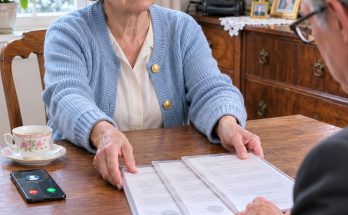
The first letter arrived on a Tuesday.
There was nothing remarkable about the envelope.
Plain white paper.
My name typed across the front.
No return address.
I nearly threw it into the recycling bin with the advertisements and supermarket coupons.
Then I noticed the handwriting on the back.
Not handwriting, exactly.
A small blue ink mark beneath the flap.
Three initials.
D.B.
My father's initials.
I carried the envelope into the kitchen.
Mom was sitting at the table helping Sophie with a history assignment.
“What is it?” Mom asked.
“I don't know.”
Sophie looked up.
“Another mystery?”
I smiled.
“Hopefully a boring one.”
I opened it carefully.
Inside was a single sheet.
The message was short.
There are records your father asked me to preserve. One of them may explain why he was so concerned about Margaret's property.
Call me.
Below the message was a telephone number.
I stared at it.
Mom noticed my expression.
“What?”
I handed her the paper.
She read it.
Then she looked at me.
“Who is it?”
“I don't know.”
I called the number from my phone.
A man answered on the fourth ring.
“Claire Bennett?”
“Yes.”
“My name is Thomas Wallace.”
I froze.
“Thomas?”
“Yes.”
I glanced at Mom.
“Are you related to Mr. Wallace?”
“My father was Daniel Wallace.”
Dad's attorney.
The man who had died years earlier.
Thomas continued.
“My father left some files in my possession.”
“What kind of files?”
“The kind he didn't want destroyed.”
My pulse quickened.
“Why are you contacting me now?”
“Because I found something while clearing out his office.”
“What?”
“A letter from your father.”
Mom stood.
“What does it say?”
Thomas heard her.
“Is Margaret with you?”
“Yes.”
“Then she should hear this too.”
We arranged to meet two days later.
Thomas chose a small coffee shop near the courthouse.
He arrived carrying a battered leather briefcase.
He looked to be in his late fifties.
His father's resemblance was obvious around the eyes.
“I remember your father,” he said after we introduced ourselves.
“You knew him?”
“I was young. I worked in my father's office.”
Mom sat beside me.
Thomas placed the briefcase on the table.
“My father told me never to open this unless Claire or Margaret came looking.”
I looked at him.
“We weren't looking.”
“No.”
He smiled faintly.
“But circumstances have a way of finding people.”
He opened the briefcase.
Inside were folders.
Old ones.
Yellowed paper.
Carbon copies.
A small cassette tape.
And a sealed envelope.
The envelope had Dad's handwriting.
My name.
Again.
I felt my throat tighten.
“Why didn't your father give this to me?”
“Because your father asked him to keep it.”
“Until when?”
“Until the dispute over the property was settled.”
I looked at Mom.
“The dispute wasn't settled until now.”
Thomas nodded.
“Exactly.”
I opened the envelope.
The letter was dated five days before Dad died.
Claire,
If you're reading this, then the protections I put in place should already be enough. If they aren't, the enclosed documents will explain why.
There was no dramatic language.
No accusation.
Just my father's careful handwriting.
He explained that Greg had approached him about using the house as collateral for a business loan.
Dad refused.
Greg became angry.
Then Greg claimed Mom had already agreed.
Dad investigated.
He discovered that several documents had been prepared without Mom's full knowledge.
But there was more.
Dad had found evidence that Greg was using money from one investor to cover another investor's losses.
A classic chain that could collapse at any moment.
I looked up.
“He knew.”
Thomas nodded.
“My father helped him investigate.”
Mom's face had gone pale.
“What did Greg want from me?”
Thomas answered gently.
“Your signature.”
“But I never gave him permission.”
“I know.”
He slid another document toward us.
It was an affidavit.
Dad had written that Mom's signature on the security agreement was fraudulent.
The affidavit had been witnessed by Daniel Wallace.
I stared at the signature.
My father's.
My mother's.
The notary's.
Everything fit.
Except one thing.
The date.
It was the day before Dad's final confrontation with Greg.
I looked at Thomas.
“Why didn't this stop the claim?”
“Because your father died before the affidavit could be filed.”
Silence.
Mom covered her mouth.
“So the evidence existed.”
“Yes.”
“But nobody knew.”
“Correct.”
I looked down at the table.
Twenty years.
Twenty years of assumptions.
Twenty years of Mom believing she had ruined everything.
Twenty years of me believing I had needed to become the responsible one because there was no other choice.
And the evidence had been sitting in a briefcase.
Waiting.
Thomas handed me another document.
“This one may matter more.”
It was a letter from Greg.
Not to Dad.
To Mom.
The language was polite.
Almost affectionate.
He referred to her as Margaret.
He described the investment as an opportunity.
Then he wrote:
Once Daniel is gone, Claire will handle everything.
I stopped reading.
Mom closed her eyes.
“He knew.”
“Yes.”
“He knew I would take over.”
Thomas nodded.
“That appears to have been his expectation.”
The sentence made my skin crawl.
Greg hadn't simply taken advantage of Mom.
He had anticipated me.
He had counted on my sense of responsibility.
He had understood that if Mom became financially unstable, I would step in.
The grocery card suddenly looked different.
The house payments.
The repairs.
The money.
The years.
Not because Greg had directly caused them.
But because the weakness he created had eventually become my burden.
Thomas leaned forward.
“There is one more thing.”
“What?”
“My father believed Greg had help.”
Mom looked at him.
“From whom?”
“We don't know.”
“Then why tell us?”
“Because of the old notary.”
I frowned.
“What about him?”
“My father suspected the notary had been used to validate several fraudulent documents.”
“But he's dead.”
“Yes.”
Thomas opened another folder.
“His son isn't.”
I stared at the papers.
The notary's son had inherited his father's records.
Including the old logbooks.
If the logbook showed Mom hadn't appeared before the notary on the date of the security agreement, the forgery would be even harder to dispute.
David agreed.
He contacted the notary's son.
Three weeks later, we sat in a conference room while an old leather ledger was placed before us.
The entries were handwritten.
Dates.
Names.
Document descriptions.
Signatures.
We found the date.
Mom's name was there.
But the signature in the ledger was different.
David looked carefully.
“This is significant.”
The notary's son leaned back.
“My father used to complain about that day.”
“Why?”
“He said a man brought several documents and insisted they be processed quickly.”
“Who?”
“He never told me.”
“Did he mention Greg?”
The man shook his head.
“No.”
Then he turned the page.
A note had been written in the margin.
Client not present.
I stared at it.
Mom began crying.
“He knew.”
David nodded.
“Yes.”
For the first time, the evidence wasn't merely circumstantial.
There was a contemporaneous record showing Mom hadn't been present when the document was supposedly notarized.
The company withdrew its demand within forty-eight hours.
Their attorney cited insufficient evidence.
Greg's lawyer stopped responding.
The old claim against the house disappeared.
But I wasn't satisfied.
Not because I wanted revenge.
Because there was one question left.
Who had forged the documents?
David warned us that proving it after twenty years might be impossible.
We accepted that.
We didn't need every mystery solved.
We needed the truth that mattered.
Mom hadn't knowingly pledged the house.
Dad had known.
He had tried to protect us.
And I had never been responsible for repairing a mistake I hadn't caused.
One evening, Mom and I sat on the porch.
The air smelled of wet grass.
She held a cup of tea between both hands.
“I've been thinking.”
“About what?”
“The grocery card.”
I smiled.
“Of all things?”
“Yes.”
She looked toward the street.
“If you hadn't canceled it, none of this would have happened.”
I thought about that.
“You're right.”
She looked surprised.
“You don't think that's strange?”
“No.”
“Why?”
“Because sometimes the thing that feels like a disaster is the thing that finally forces everyone to stop pretending.”
Mom nodded.
“I hated you for that.”
“I know.”
“I thought you were cruel.”
“I know.”
She looked at me.
“And now?”
I smiled.
“Now?”
“I think you saved me.”
I shook my head.
“No.”
She frowned.
“You saved yourself.”
She looked away.
A small smile appeared.
“Maybe.”
The next morning, Sophie found us sitting together.
She looked from one to the other.
“Are you two friends again?”
Mom laughed.
“I hope so.”
Sophie nodded.
“Good.”
Then she put a plate of toast on the table.
“I made breakfast.”
Mom stared at it.
“You cooked?”
“Toast.”
“Still impressive.”
Sophie grinned.
For once, the house felt completely ordinary.
And that ordinary feeling was something I had never appreciated before.
Click here to continue reading: PART 14: The Truth About Dad’s Final Week Gave My Mother Something She Had Never Allowed Herself to Have, and It Changed How She Faced the Past
By Friday Afternoon, I Finally Discovered Why My Quiet Daughter Had Been Eating Cold Pasta Like She Hadn’t Seen Food in Days
Part 13 of 20