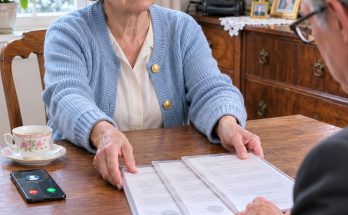
The principal's office smelled faintly of coffee and dry-erase markers.
Sophie sat beside me, swinging her feet beneath the chair.
She kept looking at me.
“Am I in trouble?”
“No.”
“Then why are we here?”
“I don't know yet.”
The principal, Mrs. Harris, smiled.
“You're not in trouble.”
Sophie relaxed.
Mrs. Harris folded her hands on the desk.
“Last year, we had a temporary issue with a student lunch account.”
Sophie looked down.
I knew exactly where this was going.
“We've had several similar cases since then,” the principal continued. “Families dealing with delayed benefits, payment problems, unexpected expenses.”
She opened a folder.
“We realized we needed something more permanent.”
I listened.
“We're creating an emergency lunch fund.”
Sophie looked up.
“For kids who don't have money?”
“For kids whose accounts are temporarily short,” Mrs. Harris explained.
Sophie nodded.
“That happened to me.”
“Yes.”
Mrs. Harris smiled.
“And that's why your mother made a donation.”
Sophie turned toward me.
“You did?”
I nodded.
“I donated to the district.”
“How much?”
I hesitated.
Mrs. Harris answered.
“Twenty-eight hundred dollars.”
Sophie stared at me.
“That's Grandma's old grocery money.”
I smiled.
“Yes.”
Her eyes widened.
Mrs. Harris continued.
“We'd like to establish the fund permanently. With your permission, we'd like to call it the Bennett Lunch Fund.”
I immediately shook my head.
“You don't have to name it after us.”
“We want children to understand why it exists.”
I looked at Sophie.
She was thinking.
Finally she said, “Maybe don't use my name.”
Mrs. Harris laughed softly.
“That isn't what we planned.”
“Good.”
I squeezed her hand.
The opening ceremony was scheduled for the following week.
I expected a small gathering.
Instead, the cafeteria was full.
Teachers.
Parents.
Students.
Staff.
Several members of the district board.
And Mom.
I hadn't invited her.
Sophie had.
When I saw her standing near the back wall, wearing a navy cardigan, I felt something inside me loosen.
She caught my eye.
Then she smiled.
The principal stepped to the microphone.
“We often imagine generosity as something enormous,” she said.
The room quieted.
“But sometimes meaningful change begins with one ordinary decision.”
She looked toward me.
“Last year, a family experienced something that no child should experience. A temporary account problem became a lesson in dignity, communication, and community.”
I glanced at Sophie.
She was listening carefully.
“This fund exists so that a student will never again have to sit quietly because they are afraid to say they are hungry.”
Applause filled the room.
Sophie looked embarrassed.
I leaned closer.
“You okay?”
She nodded.
“I didn't know so many people would be here.”
“Neither did I.”
Mrs. Harris announced that the initial donation would cover thousands of emergency lunches.
The applause grew louder.
Sophie looked at me.
“You really did that?”
“Yes.”
“Why didn't you tell me?”
“Because I wasn't doing it for attention.”
She smiled.
“I think that's why it matters.”
Afterward, several parents thanked me.
I kept saying the same thing.
“It wasn't just me.”
Because it wasn't.
The school had listened.
The district had responded.
The cafeteria staff had cared.
Sophie had told the truth.
Even Mom had eventually become part of the lesson.
When the crowd thinned, Sophie and I stood near the lunch counter.
She stared at the place where she'd once stood alone.
“Do you remember?” I asked.
She nodded.
“I remember.”
“What do you remember most?”
She thought for a moment.
“The noise.”
“What noise?”
“Everybody eating.”
Her answer broke something open in me.
I had remembered the hunger.
She had remembered the sound.
Forks against trays.
Children laughing.
Cafeteria workers calling out numbers.
Chairs scraping.
Normal life continuing around her.
“I thought nobody noticed me,” she said.
I put my hand on her shoulder.
“I wish you had told me.”
“I know.”
She looked at me.
“But I thought I was helping.”
“I know.”
“Now I know I wasn't.”
She smiled faintly.
“You taught me that.”
We walked toward the exit.
Mom waited near the doors.
She had tears in her eyes.
“I heard what you said.”
Sophie hugged her.
Mom held her tightly.
Then she looked at me.
“I should have understood last year.”
“You do now.”
Mom nodded.
“Yes.”
That afternoon, she invited Sophie to her house to bake.
I dropped her off around three.
When I returned an hour later, flour covered nearly every surface in the kitchen.
Sophie was laughing.
Mom looked guilty.
“What happened?”
“She forgot the timer,” Sophie said.
“I did not forget.”
“You forgot.”
“I was talking.”
“You burned them.”
Mom lifted a cookie.
It was dark around the edges.
Sophie laughed.
I laughed too.
Mom shook her head.
“Fine.”
She set the cookie down.
“I burned the cookies.”
Sophie grabbed another.
“This one is good.”
Mom smiled.
Then she walked to a drawer.
She returned carrying a small recipe card.
The paper was yellowed.
The handwriting was old-fashioned.
I recognized it immediately.
Dad's.
My throat tightened.
“What is that?”
Mom handed it to Sophie.
“Your grandfather's oatmeal cookie recipe.”
Sophie stared at the card.
“Grandpa wrote this?”
Mom nodded.
“He made these when your mother was little.”
I touched the edge of the card.
I hadn't seen Dad's handwriting in years.
Mom looked at me.
“He always said good food should make people feel cared for.”
Sophie held the card carefully.
“Can I keep it?”
Mom looked at me.
I nodded.
“Yes.”
Sophie smiled.
Mom's eyes filled with tears.
She turned away.
I pretended not to notice.
Not because we were avoiding emotion.
Because sometimes people need a moment to have it privately.
That evening, I drove home alone.
Sophie stayed with Mom for dinner.
The road was dark.
Streetlights passed across the windshield.
I thought about Dad.
About the insurance money.
About Greg.
About the house.
About the years Mom had spent standing on the foundation I built.
And about the fact that she was finally building something of her own.
When I reached home, there was an envelope waiting in the mailbox.
My name was written across the front in Mom's handwriting.
I opened it at the kitchen table.
Inside was a letter.
I read the first line.
Then stopped.
I had expected an apology.
What I found was something much harder.
My mother had finally understood what she had taken from me.
Not just money.
Not just time.
Trust.
And she was ready to say it without asking me to forgive her.
Click here to continue reading: PART 8: My Mother’s Christmas Letter Finally Explained Why She Had Clung to My Help, and the Truth Changed What Forgiveness Could Mean
By Friday Afternoon, I Finally Discovered Why My Quiet Daughter Had Been Eating Cold Pasta Like She Hadn’t Seen Food in Days
Part 7 of 20