The conversation started because of a casserole.
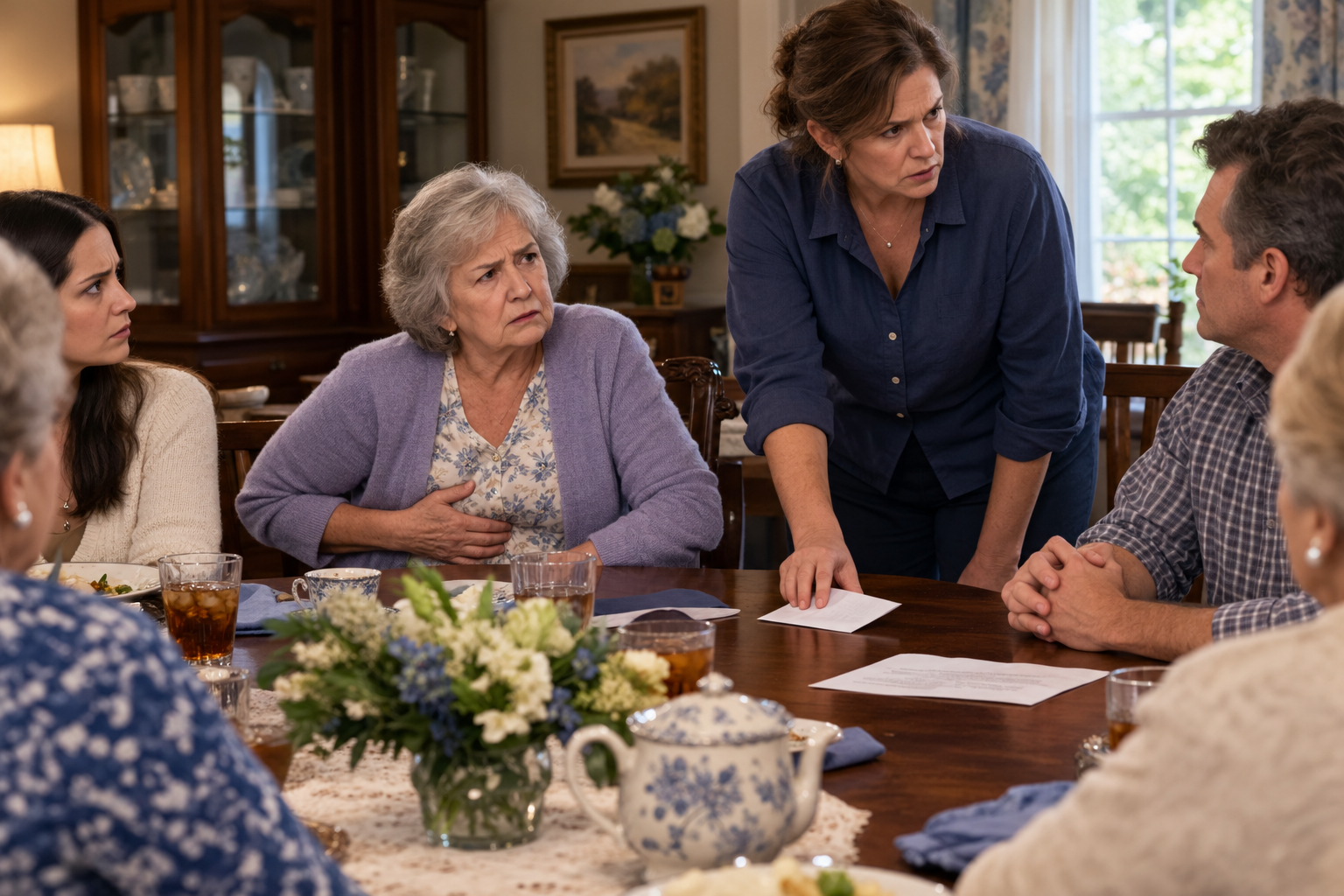
A neighbor named June brought it over on a Tuesday afternoon.
Mama invited her inside.
June was seventy-two and lived three houses down.
They had known each other for years.
I was in the kitchen when I heard June say, “My daughter thinks I should see a doctor.”
Mama answered, “Why?”
“My side has been hurting.”
The spoon in my hand stopped.
I looked toward the living room.
June laughed.
“It isn't anything serious.”
Mama went completely still.
I stepped into the doorway.
June looked at me.
“What?”
Mama asked, “How long?”
June waved her hand.
“A few months.”
Mama exchanged a look with me.
“How bad?”
“Some days worse.”
“Have you seen anyone?”
“No.”
“Why?”
June shrugged.
“My husband says I'm always worrying.”
Mama sat forward.
“What does your body say?”
June looked confused.
“What?”
Mama's voice became firm.
“What does your body say?”
June stared at her.
“I don't know.”
Mama reached across and took her hand.
“Then find out.”
June laughed nervously.
“You sound like a doctor.”
“No.”
Mama looked at me.
“I just know what happens when you wait.”
June's expression changed.
She stayed another hour.
Before leaving, she promised she would call her doctor.
Mama watched her walk down the path.
Then she sat back.
“I didn't expect to say that.”
“You needed to.”
She nodded.
“I heard myself.”
“What did you hear?”
“The old me.”
I understood.
The woman who had once apologized for pain.
The woman who had accepted “you're worrying too much.”
The woman who had believed asking for help was a burden.
“She needed someone to tell her it was okay to take herself seriously,” Mama said.
“You're giving June what you needed.”
She looked at me.
“Maybe.”
Two weeks later, June came back.
She had seen her doctor.
There was nothing life-threatening.
A treatable condition.
She needed medication and follow-up.
June hugged Mama.
“I almost didn't go.”
Mama hugged her back.
“I almost didn't either.”
June pulled away.
“But you did.”
“Yes.”
They smiled at each other.
That afternoon, Mama called me into the kitchen.
“Do you know what I've learned?”
“What?”
“People think strength means enduring.”
She put a cup in the sink.
“Sometimes strength means admitting you can't keep enduring.”
I nodded.
She looked at me.
“I wish more people knew that.”
That evening, Daniel came over.
He had brought the mail.
Mama frowned.
“Why do you have my mail?”
He smiled.
“You asked me to bring the package.”
“Oh.”
He put it on the table.
“Anything else?”
“No.”
He started toward the door.
Mama called him back.
“Daniel.”
He turned.
“Sit.”
He sat.
Mama looked at him.
“June came over.”
“Okay.”
“She had pain.”
Daniel nodded.
“Did she see a doctor?”
“Yes.”
Mama smiled.
“I told her to.”
Daniel looked at her.
“You've become dangerous.”
She laughed.
“I've become honest.”
He smiled.
Then his expression changed.
“Mom?”
“Yes?”
“Do you think I was a bad son?”
The question caught all of us off guard.
Mama was quiet.
“No.”
Daniel looked relieved.
“But you did bad things.”
He nodded.
“I know.”
“Being a bad son isn't the same as doing bad things.”
“What is it?”
“Refusing to change.”
Daniel looked at her.
“I don't want to be that person.”
“Then don't.”
He nodded.
“I won't.”
Mama reached for his hand.
“That's all I ever wanted.”
The next year passed quietly.
There were no crises.
No bank letters.
No hospital emergencies.
No family confrontations.
That almost made me nervous.
I had become accustomed to waiting for the next disaster.
Mama noticed.
“You're always looking over your shoulder.”
“Maybe.”
“You don't have to.”
“I know.”
“Then stop.”
“I'll try.”
She shook her head.
“Decide.”
I laughed.
“You're obsessed with that word.”
“It works.”
And slowly, it did.
I stopped expecting every phone call to be bad news.
I stopped checking Mama's face every time she touched her side.
I stopped worrying that Daniel would suddenly return to his old behavior.
Not because I believed people couldn't relapse into old habits.
Because I had learned to look at what they actually did.
Daniel kept his promises.
He paid his bills.
He respected Mama's decisions.
He asked before helping.
He never touched her finances again.
He became more careful with money.
He became more honest about his own fears.
That was enough.
One Sunday, we had dinner together again.
The same table.
The same room.
Different people.
Mama pushed her plate forward.
My heart jumped.
She saw my face and laughed.
“Relax.”
“What?”
“My back hurts.”
Daniel looked up.
“Want a pillow?”
Mama nodded.
“Yes.”
He stood.
I watched him bring one.
He didn't tell her what she needed.
He asked.
That was the difference.
Mama leaned back.
“Thank you.”
Daniel sat.
She looked around the table.
“See?”
“What?”
“Nothing has to become a crisis.”
I smiled.
“That's good.”
She took another bite.
Then she looked at me.
“Eat.”
I did.
After dinner, Daniel washed the dishes.
Mama dried them.
I stood nearby.
At one point, Daniel dropped a plate.
It shattered.
He froze.
Mama looked at the pieces.
Then laughed.
“It was ugly anyway.”
Daniel stared at her.
“Seriously?”
“Yes.”
I laughed.
He laughed.
We cleaned it up.
Nobody blamed anyone.
Nobody shouted.
Nobody left.
It was just a broken plate.
That was all.
And maybe that was another lesson.
Not everything broken needs to become a catastrophe.
Sometimes you sweep up the pieces and keep going.
Later that night, Mama and I sat on the porch.
She looked at the tree.
It was taller now.
The branches stretched above the roofline.
“I can't believe how much it grew.”
“You planted it.”
“Yes.”
“You waited.”
“Yes.”
“You kept watering it.”
She smiled.
“I suppose I did.”
I looked at her.
“Did you ever think you wouldn't live to see this?”
She was quiet.
“Yes.”
“Do you think about that often?”
“No.”
“Why?”
“Because I'm seeing it.”
She touched the arm of the chair.
“That's enough.”
I smiled.
The tree had become part of the house.
Its branches moved when the wind came through.
Birds rested there.
Children from the neighborhood sometimes stopped to look at the blossoms.
Mama loved that.
One afternoon, she found a young girl standing beneath it.
“What are you doing?”
The girl looked embarrassed.
“Looking.”
Mama smiled.
“You can.”
The girl pointed toward the blossoms.
“Did you plant it?”
“Yes.”
“Did it look like that before?”
“No.”
“How long did it take?”
Mama smiled.
“A while.”
The girl nodded.
“I want one.”
“Then plant one.”
“My mom says I don't have patience.”
Mama laughed.
“Neither did I.”
The girl looked surprised.
“But you have a tree.”
“Yes.”
Mama touched one of the branches.
“Sometimes patience is just deciding not to give up before the thing has time to grow.”
The girl smiled.
Then she ran home.
I watched her.
Mama looked at me.
“Did that sound old?”
“A little.”
She laughed.
“I don't care.”
That evening, Daniel arrived with dinner.
“Why didn't you tell me you were cooking?”
Mama frowned.
“I wasn't.”
“I brought food.”
“What kind?”
“Chicken.”
She looked at the container.
“Good.”
Then she opened another.
“What is that?”
“Sausage.”
Mama looked at me.
I burst out laughing.
Daniel looked confused.
“What?”
“Nothing,” I said.
Mama shook her head.
“You don't know when to stop.”
Daniel smiled.
“I know exactly when to stop.”
We ate together.
At some point, Daniel looked at Mama.
“Mom?”
“Yes?”
“I'm glad you're here.”
She smiled.
“So am I.”
He looked at me.
“I mean both of you.”
I smiled.
“We know.”
He nodded.
No speech followed.
No dramatic confession.
It didn't need one.
Some things become more meaningful when they are said simply.
After dinner, Mama stood at the sink.
Daniel tried to take the plate from her.
“I'll do it.”
She shook her head.
“I've got it.”
He stopped.
“Okay.”
He let her.
That was another small victory.
Not because washing a plate mattered.
Because he understood the difference between offering help and taking control.
When he left, Mama locked the door.
She checked the windows.
Then she turned off the kitchen light.
We walked toward the stairs.
She stopped.
“You know what?”
“What?”
“I think I finally understand what Dad meant.”
“About what?”
“Family.”
She smiled.
“He used to say family isn't the people who never hurt you.”
“What did he say?”
“That family is the people who tell the truth after they do.”
I looked at her.
“Did he really say that?”
She laughed.
“Maybe.”
“You're making it up.”
“Maybe.”
We continued upstairs.
At her bedroom door, she hugged me.
“Good night.”
“Good night.”
She closed the door.
I stood there for a moment.
The house was quiet.
But it no longer felt fragile.
It felt lived in.
Loved in.
Honest in.
And that was enough.
Click here to continue reading: PART 12: Years After the Sunday Dinner, Mama Returned to the Same Table With a Story That Made All of Us Go Quiet
At Sunday Dinner, My Mother Finally Admitted the Pain Was Worse Than She Had Let Anyone Believe
Part 11 of 20