
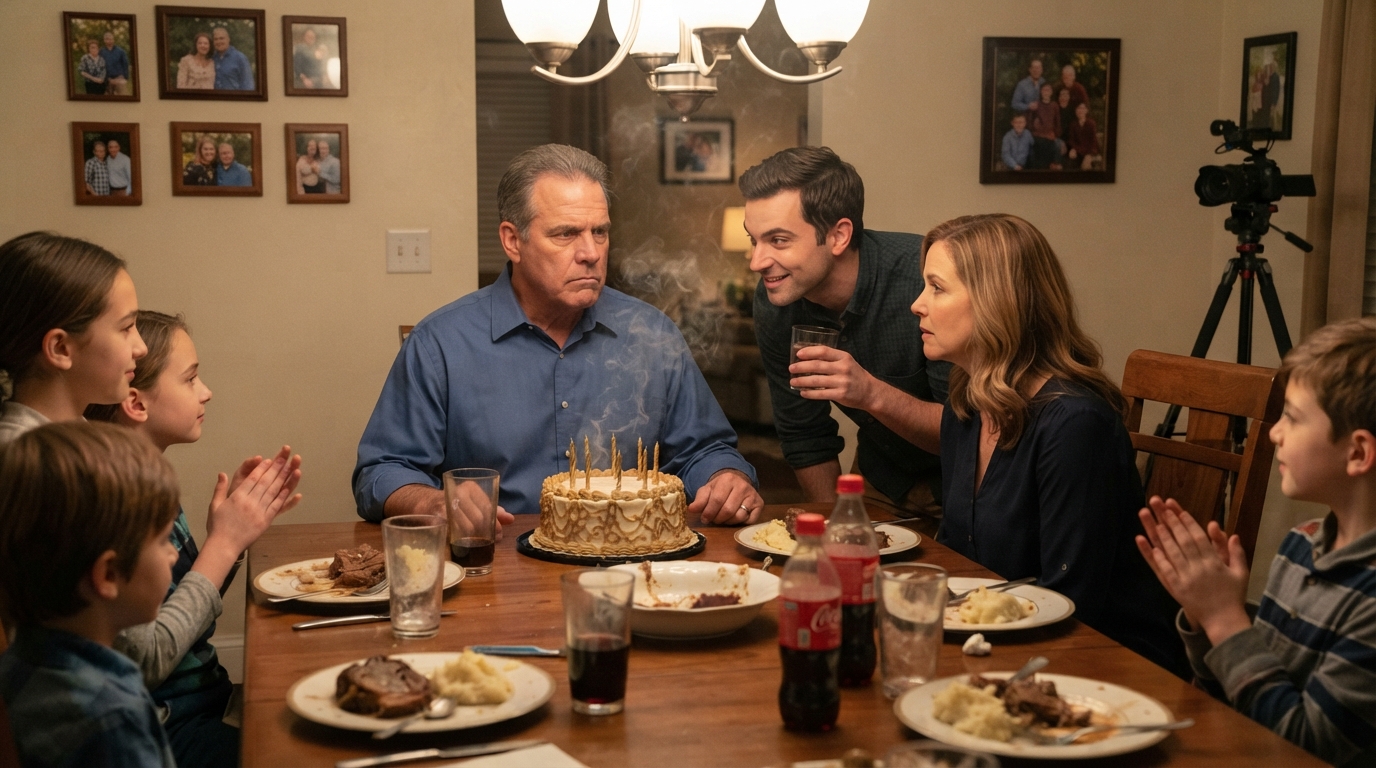
The investigators arrived less than an hour later.
Daniel sat at the kitchen table while they recorded his statement.
He did not ask for water.
He did not ask for a lawyer before speaking.
He simply began.
“I lied to my father.”
His voice shook.
“But that isn't where this started.”
One investigator looked up.
“Where did it start?”
“Before I knew what Northstar was.”
Daniel rubbed his palms against his jeans.
“Victor approached me after Mom became sick.”
Eleanor closed her eyes.
Daniel continued.
“He knew I was gambling.”
“Did he encourage it?”
“Yes.”
“How?”
“He gave me money.”
“Why?”
“At first, I thought he was helping.”
“And later?”
“I realized he wanted me dependent on him.”
The investigator wrote something down.
Daniel looked at me.
“I should have stopped.”
I said nothing.
He continued.
“Then Mercer came in.”
“What did Mercer do?”
“He showed me documents about the family trust.”
Robert leaned forward.
“Did he know about the trust before you?”
“Yes.”
“Who told him?”
“I don't know.”
Daniel swallowed.
“He said if I could get Dad to sign control over the house, everything would be settled.”
“What did he mean by settled?”
“He said my debts would disappear.”
“And if you refused?”
Daniel looked at his hands.
“He threatened me.”
“With what?”
“Evidence.”
“What evidence?”
“Money transfers. Fraud. Gambling. Everything.”
I looked at him.
“So you were trapped.”
“No.”
His answer surprised me.
“I was afraid.”
He looked up.
“But I still chose.”
That sentence mattered.
For the first time, Daniel wasn't hiding behind circumstances.
The investigator nodded.
“Continue.”
Daniel explained how he had obtained copies of my financial documents.
He admitted forging signatures.
He admitted contacting my bank.
He admitted trying to add himself to my accounts.
He admitted asking about the insurance.
He admitted the power-of-attorney documents were prepared with Mercer's help.
Then he admitted something I hadn't known.
“He told me Dad's house was only worth something if we could transfer it before the trust was activated.”
Robert's expression sharpened.
“When was the trust supposed to activate?”
“After Ernest's death.”
I felt a chill.
Daniel looked at me.
“I was supposed to make it look voluntary.”
The investigator asked, “And the birthday?”
Daniel closed his eyes.
“I was angry.”
“Why?”
“Because Dad wouldn't cooperate.”
“Did you intend to harm him?”
“No.”
“Then what did you mean when you said you hoped it was his last birthday?”
Daniel looked at me.
“I wanted his last birthday before he stopped being useful.”
The words hurt more than the original whisper.
But I needed the truth.
The investigator wrote it down.
Daniel continued.
“I knew how horrible it sounded.”
“Then why say it?”
“Because I wanted him to be scared.”
I nodded slowly.
That was the answer I had wanted.
Not an excuse.
The truth.
The interview continued for nearly three hours.
When it ended, Daniel looked exhausted.
The investigator told him he would need to cooperate with further questioning.
Daniel nodded.
Before leaving, he turned toward me.
“Dad.”
I looked at him.
“I don't expect you to forgive me.”
“Good.”
He nodded.
“But I want you to know I'm sorry.”
I didn't answer immediately.
Then I said, “Being sorry is the beginning.”
He looked down.
“Not the end.”
He nodded.
After he left, Eleanor remained at the table.
She looked toward the door.
“He finally told the truth.”
“Yes.”
“That may save him.”
“It won't erase what he did.”
“No.”
She looked at me.
“But it may stop the next person from being hurt.”
I thought about Theresa.
That was probably what she had wanted.
Not a perfect ending.
Just fewer victims.
The next several days passed in a blur of interviews, documents, and phone calls.
Mercer was arrested at an airport.
Victor surrendered shortly afterward.
Northstar's accounts were frozen.
Investigators traced transfers through several companies.
Some of the money had already disappeared.
Some was recovered.
The money connected to my shop was returned.
My name was cleared.
But clearing my name didn't erase the feeling of violation.
Someone had used my identity while I was sleeping in the room beside the safe my wife had prepared.
That knowledge stayed with me.
Robert helped finalize the trust.
The house remained mine.
The grandchildren were protected.
Daniel could no longer alter anything without independent legal review.
The documents he had forged were formally invalidated.
For the first time in months, I slept without checking the lock twice.
Then came the court hearing.
Daniel stood beside his attorney.
He looked smaller than I remembered.
Not weak.
Just stripped of the confidence he had once carried.
When the judge asked whether he understood the charges, he said yes.
When asked how he pleaded, he admitted responsibility.
Fraud.
Forgery.
Financial deception.
Attempted unlawful control of property.
Gambling-related debts.
He didn't blame Victor.
He didn't blame Mercer.
He didn't blame me.
He simply told the truth.
The judge considered his cooperation and the recovery of some of the money.
Daniel avoided the maximum sentence.
But there were consequences.
His business was gone.
His credit was ruined.
Lucy filed for divorce.
Their house was sold.
Daniel was required to repay what he could and participate in counseling.
For a while, I heard nothing from him.
Then a letter arrived.
I left it unopened for three days.
When I finally opened it, there were only two pages.
He wrote about the first time I took him to the shop.
He remembered the smell of oil.
The red toolbox.
The stool he couldn't reach.
He remembered falling asleep on the couch while I finished paperwork.
Then he wrote something that made me stop.
I spent years thinking you owed me the life I wanted because you were my father. I finally understand that you gave me a life. What I did with it was mine.
I folded the letter.
I did not call him.
Not yet.
Eleanor stayed with me for several weeks while the legal matters were completed.
She and I spoke about Theresa often.
One evening, she told me something I hadn't known.
“Your wife was afraid of dying.”
I looked at her.
“Theresa?”
“Yes.”
“I never knew.”
“She didn't want you to know.”
“Why?”
“She thought you'd stop living.”
I looked toward the photograph on the mantel.
“She was right.”
Eleanor smiled sadly.
“But she was also wrong.”
I turned toward her.
“How?”
“You're living now.”
I thought about that.
She was right.
For years after Theresa died, I had preserved everything exactly as she left it.
The curtains.
The sewing room.
The photographs.
Even the chipped blue mug she used every morning.
I had believed keeping everything unchanged meant keeping her close.
Instead, I had been keeping myself trapped.
A month later, I opened the sewing room windows.
I packed some of Theresa's things for Eleanor.
Not because I wanted to erase her.
Because I finally understood that memories didn't require locked doors.
Then I visited Marcus.
The shop had changed.
New paint.
New equipment.
But the old sign remained.
SULLIVAN AUTO REPAIR.
“You kept it,” I said.
Marcus wiped his hands on a rag.
“Of course.”
“You didn't have to.”
“I know.”
He smiled.
“You built it.”
I looked around.
Young mechanics moved between the lifts.
Customers waited in the office.
The smell of oil and warm rubber filled the air.
For the first time, the shop felt alive without belonging to me.
Marcus handed me a key.
I frowned.
“What is this?”
“Your old office.”
“I sold the building.”
“You sold the business.”
“Yes.”
“You didn't sell your chair.”
I laughed.
“I don't need a chair.”
“You do if you're going to drink coffee with us.”
I shook my head.
“I'm retired.”
“Then retire here.”
I looked at him.
He shrugged.
“Just don't work.”
I took the key.
That became my routine.
A few mornings each week, I sat in the office.
I listened to the mechanics argue about tools.
I drank terrible coffee.
I watched apprentices make mistakes and learn from them.
Nobody asked me how much the building was worth.
Nobody asked me about my bank accounts.
Nobody asked me what I planned to leave behind.
They simply asked whether I wanted coffee.
One afternoon, Noah came running through the garage.
“Grandpa!”
I opened my arms.
He crashed into me.
His mother followed behind him.
Lucy looked different.
Tired.
But calmer.
She handed me a small paper bag.
“Noah made this.”
I opened it.
A birthday card.
The front was covered in crooked blue letters.
Happy Birthday, Grandpa.
Inside was one sentence.
I hope you blow out a hundred candles.
My eyes burned.
Noah looked up.
“Is it good?”
I nodded.
“It's perfect.”
“Why are you crying?”
“I'm not.”
“You are.”
I laughed.
“Old men cry sometimes.”
He giggled.
Then he looked around.
“Dad says he's sorry.”
I stopped smiling.
“Did he?”
“He says he misses you.”
I sat in Marcus's old office chair.
“Do you miss him?”
Noah nodded.
“He's still my dad.”
I looked at him.
“Yes.”
“Are you going to forgive him?”
I thought about Daniel.
About the birthday candle.
The forged documents.
The house.
The fear.
Then I thought about the boy who once fell asleep on my chest.
“I already started.”
Noah smiled.
“Does that mean Dad can come home?”
I shook my head gently.
“Forgiveness doesn't mean everything goes back to the way it was.”
He frowned.
“Then where does Dad go?”
I smiled.
“Wherever he earns his way back to.”
That evening, I went home alone.
I stood in the kitchen where Daniel had once asked for my house.
The room looked exactly the same.
But I didn't.
I opened the safe one last time.
Inside was the trust.
Theresa's letters.
The photograph of the three sisters and brother.
The legal documents.
And the card from Noah.
I placed the card beside Theresa's photograph.
Then I closed the safe.
I did not lock it.
I didn't need to.
The important things were no longer hidden from me.
A year passed.
Daniel changed slowly.
There was no miracle.
No sudden transformation.
He attended counseling.
He worked ordinary jobs.
He made restitution payments.
He stopped gambling.
He learned to live without assuming someone else would rescue him.
Once a month, he visited me.
At first, we sat across from each other without speaking.
Then we talked about small things.
The weather.
The grandchildren.
The shop.
Eventually, we laughed.
The first time it happened, Daniel looked almost startled.
“So we're laughing again,” he said.
I smiled.
“Apparently.”
He looked down.
“I don't deserve this.”
“Maybe not.”
He nodded.
“But I'm grateful.”
I reached across the table.
Not to erase what happened.
Not to pretend it hadn't.
Just to let him know that the door to redemption was not the same as the door to trust.
He understood.
That was enough.
Sometimes a family doesn't survive by returning to what it was.
Sometimes it survives by becoming honest about what it became.
And sometimes the greatest thing a parent can give an adult child isn't another rescue.
It's the chance to face the consequences, tell the truth, and earn his way back.
I still think about Theresa on my birthday.
I still remember the candle flames.
But now, when the cake arrives, I don't listen for the words I once feared.
I listen to Noah counting.
One.
Two.
Three.
Until he reaches the number he thinks is lucky.
Then everyone sings.
And when the candles are lit, I close my eyes.
Not because I'm afraid of what comes next.
Because I am grateful there is something next.
Click here to continue reading: PART 9: The Peace I Had Built Was Tested When Daniel Returned With a Truth He Had Been Too Afraid to Tell Me
The Birthday Candle Went Dark, But My Son’s Quiet Words Kept Burning Long After Everyone Had Gone Home
Part 8 of 25

