The next school meeting was scheduled for a Monday.
Noah's mother told me about it on Sunday evening.
She had received an email from the counselor outlining the concerns raised since the first investigation.
The school wanted to discuss the new cafeteria comment and review the support plan.
“They're taking it seriously now,” she said.
“That's good.”
“But I'm worried they'll think we're asking for too much.”
“What are you asking for?”
“Clear rules. Someone Noah can go to. A way to report things without having to explain everything from the beginning every time.”
“Those sound reasonable.”
She sighed.
“I wish I didn't have to ask.”
“So do I.”
She was quiet for a moment.
Then she said, “My husband wants to come to the meeting.”
“Does Noah want him there?”
“He says he doesn't care.”
“That isn't an answer.”
“I know.”
I could hear her moving around the kitchen.
“He says he doesn't want another argument at home.”
“Then you need to ask him what would make him feel comfortable, without making him responsible for managing your husband's feelings.”
She didn't answer right away.
“I'll talk to him.”
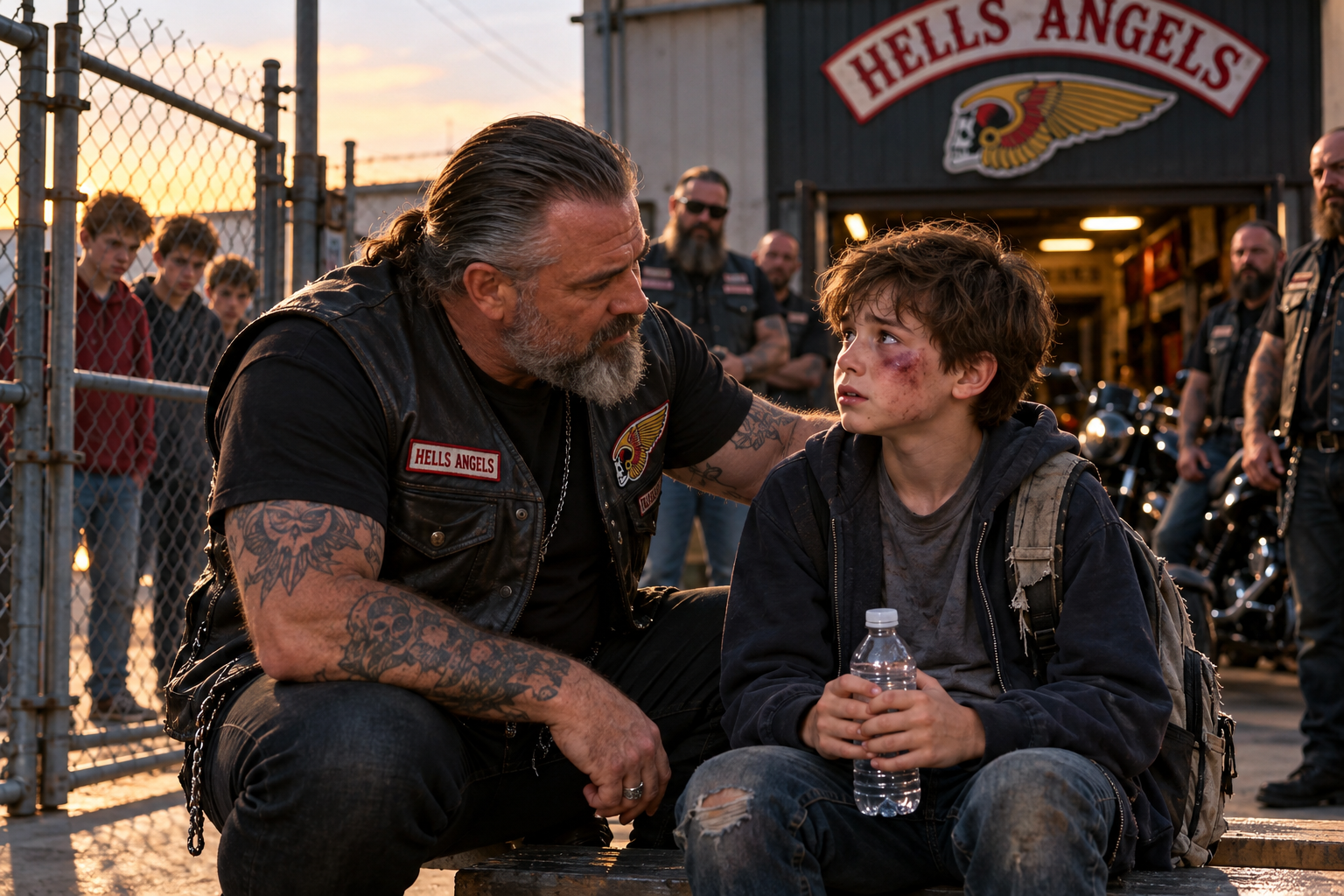
The next morning, Noah arrived at the clubhouse before school.
He was wearing a clean shirt and carrying his backpack.
His mother had dropped him off because she needed to speak to the school counselor before work.
He sat down at the table and pulled out his notebook.
“Are you nervous?” I asked.
“A little.”
“About the meeting?”
“About what happens after it.”
I sat across from him.
“What do you think might happen?”
“My stepdad might say I should have just ignored everything.”
“Has he said that recently?”
“Not exactly.”
I waited.
“He says the school keeps talking about it because I keep reporting things.”
“That puts the responsibility on you.”
Noah nodded.
“He says if I stopped talking about it, everybody could move on.”
I took a breath.
“Would the problem be solved if you stopped talking about it?”
“No.”
“Would you feel safer?”
“No.”
“Then silence wouldn't solve it. It would only make it harder for the adults to know what was happening.”
He stared at his notebook.
“I don't want him to be angry with my mom.”
“That is not your responsibility either.”
He looked up.
“But he gets angry.”
“I believe you.”
“What am I supposed to do when that happens?”
“Tell your mother how you feel. If you're worried about an argument becoming unsafe, find a trusted adult who can help. You don't have to stand between grown people and fix their disagreements.”
He nodded slowly.
I knew those words wouldn't change everything at home.
But they might give him something to hold on to the next time he felt responsible for everybody else's emotions.
His mother arrived a few minutes later.
She sat beside him and asked whether he was ready.
“Not really,” he said.
“That's all right.”
She didn't tell him to be brave.
She didn't tell him everything would be fine.
She just waited while he packed his notebook away.
Before they left, she turned to me.
“I'll call afterward.”
I nodded.
The meeting lasted longer than expected.
I knew because I checked the clock every twenty minutes and pretended I wasn't doing it.
At eleven forty, my phone rang.
It was Noah's mother.
“We're finished.”
“How did it go?”
“Better than I expected.”
“Tell me.”
“The counselor had the incident reports. She had the notes from the earlier investigation and the details about the cafeteria comment.”
“Good.”
“They agreed Noah wouldn't have to meet with the boys directly unless he chose to. They also gave him a specific staff member to contact if the counselor wasn't available.”
“That sounds useful.”
“They're going to review the plan again in two weeks.”
“Did they explain what happens if the behavior continues?”
“Yes. They said the school would follow its disciplinary policy and consider further consequences based on what happened.”
I leaned back in my chair.
“And your husband?”
She paused.
“He came.”
“How did that go?”
“He was quiet at first.”
I waited.
“Then the counselor asked whether he had any concerns about the plan. He said he thought Noah needed to learn to handle conflict.”
I felt my jaw tighten.
“What did the counselor say?”
“She explained that learning to handle conflict didn't mean accepting repeated intimidation. She said the school was responsible for addressing the behavior that happened on school grounds.”
“That was fair.”
“Yes.”
“Did he argue?”
“Not there.”
I wasn't sure whether that meant anything.
But I didn't say so.
“How's Noah?”
“He's sitting beside me. He says he's hungry.”
“That sounds promising.”
She laughed softly.
“He asked if we could stop for something to eat before we go home.”
“Then take him.”
“I will.”
Later that afternoon, Noah came to the clubhouse with a paper bag from a sandwich shop.
He had brought enough food for himself and his mother.
He set the bag on the table.
“I got you one.”
I looked inside.
It was a plain sandwich with cheese and mustard.
“You remembered.”
“You said you didn't like the spicy stuff.”
“I did say that.”
He seemed pleased that he had remembered something ordinary about me.
We ate together.
Afterward, he told me what the counselor had said.
“She said I can go straight to her office if something happens.”
“Good.”
“And if she's not there, I can go to the front office and ask for the staff member they named.”
“That's a clear plan.”
He nodded.
“She also said I don't have to talk to the boys just because they want to talk to me.”
“That's important.”
He picked at a loose corner of the sandwich wrapper.
“Do you think they're going to stop?”
“I don't know.”
He looked disappointed.
I continued.
“But now the school has a record of what happened, and you know who to speak to if something happens again.”
“That's not the same as them stopping.”
“No. It isn't.”
He folded the wrapper into a small square.
“I wish adults could just tell people to stop and have them listen.”
“So do I.”
He looked toward the garage, where two men were trying to fit a stubborn part into place.
“Sometimes people don't listen here either.”
“That is true.”
“Yesterday, you told him he was holding the wrench wrong.”
“He was holding it wrong.”
“He still didn't listen.”
“He listened eventually.”
Noah laughed.
“After you told him four times.”
“Some people require additional instruction.”
He grinned.
Then he went to ask whether he could help with the motorcycle.
The school meeting hadn't fixed his life.
It had given him a few clearer paths through it.
That mattered more than a promise that nothing bad would ever happen again.
The following week, the counselor sent Noah's mother a brief update.
There had been no further reported contact from the boys.
Noah had used the check-in system once, not because someone had threatened him, but because he felt overwhelmed after hearing laughter behind him in the corridor.
The counselor had helped him settle down before he returned to class.
His mother told me that part with a mixture of relief and sadness.
“He thought he was being ridiculous for going to her.”
“What did she tell him?”
“That it was better to check in than spend the rest of the day feeling afraid.”
“Good.”
“She said he was learning to recognize when he needed support.”
“That is a useful thing to learn.”
She smiled faintly.
“I wish I had learned it years ago.”
I didn't ask what she meant.
Some truths were better left with the person who had finally found the words for them.
On Friday, Noah arrived with his notebook.
He had written down the counselor's name and the name of the staff member who could help if she was unavailable.
He had also written a sentence at the bottom of the page.
*I can ask for help before something gets worse.**
He showed it to me.
“Do you think that's right?”
“Yes.”
“Even if nothing has happened yet?”
“If you're worried about something, you can ask for help. You don't have to wait until you're hurt.”
He read the sentence again.
Then he closed the notebook.
For once, he didn't ask whether the adults would believe him.
He was beginning to believe that his own discomfort was worth listening to.
That was not the end of the work.
It was a good beginning.
Click here to continue reading: PART 15: The Boy Who Asked for His Own Space
The Twelve-Year-Old Who Ran Into the One Place Everyone in Town Was Afraid to Enter
Part 14 of 20