
Lily was twenty-three when she asked me the question.
We were sitting on the back porch on a Sunday afternoon.
She had come home for dinner.
She had finished college.
She had started her first real job.
She was old enough to understand taxes and rent and insurance.
She was also old enough to understand why adults sometimes make choices that hurt the people they claim to love.
She held a mug between both hands.
“Nana?”
“Yes?”
“What was the worst part?”
I knew immediately what she meant.
“The money?”
“No.”
“The forged signature?”
“No.”
“The divorce?”
“No.”
She looked at me.
“Then what?”
I thought for a long time.
“The assumption.”
“What assumption?”
“That because I loved you, I would never say no.”
She nodded slowly.
“Dad thought that?”
“Yes.”
“Did you?”
“About yourself?”
“Yes.”
I looked toward the garden.
“Sometimes.”
She waited.
“I thought being useful was part of being loved.”
She frowned.
“Isn't it?”
“Sometimes.”
“But not always.”
“No.”
I touched the edge of the table.
“There is a difference between being needed and being loved.”
“What is it?”
“When someone needs you, they may focus on what you provide.”
“And love?”
“Love sees the person providing it.”
She was quiet.
Then she said, “Dad saw what you provided.”
“Yes.”
“And Mom?”
“Your mother eventually learned to see me.”
She smiled.
“And me?”
I laughed.
“You've always seen me.”
“Not when I was six.”
“You were busy with crayons.”
She laughed.
Then her expression became serious.
“I think about that first question.”
“The cost question?”
“Yes.”
“What do you think you meant?”
“I thought I was asking about money.”
“You were.”
“But maybe I was really asking whether love had a price.”
I looked at her.
“Maybe.”
She smiled.
“You told me a hug.”
“And you thought I was being difficult.”
“I thought you didn't understand.”
“I understood perfectly.”
She leaned back.
“Do you think that moment changed everything?”
“Yes.”
“Because you found the receipts?”
“Because you asked a question nobody else thought to ask.”
She laughed.
“That sounds like me.”
“It does.”
The sun was lowering behind the trees.
The tomato plants were smaller now.
I had reduced the garden because my knees couldn't manage the larger beds anymore.
Lily had taken over the biggest one.
She grew tomatoes badly.
Too much water.
Not enough pruning.
Still, I ate them.
She brought a basket into the kitchen that evening.
“Don't laugh.”
“I haven't.”
“You're smiling.”
“That's different.”
She put the tomatoes on the counter.
“I grew these.”
“They're beautiful.”
“They're ugly.”
“Beauty is subjective.”
“They're lopsided.”
“So are you.”
She stared at me.
“Nana.”
I laughed.
She did too.
After dinner, she opened the notebook Carla had given me.
“You still write in this?”
“Sometimes.”
“What have you written?”
“Things I don't want to forget.”
She turned a page.
There were dates.
Small observations.
Things Emily had said.
Things Lily had done.
The first tomato she grew.
The first time she drove alone.
The day she graduated.
The day she called me crying from college.
The day she got her first paycheck.
The day she told me she was moving into her own apartment.
Lily read silently.
Then she touched one page.
“You wrote about my first paycheck.”
“Yes.”
“What did I say?”
“You said you finally understood why adults complain about taxes.”
She laughed.
“I was right.”
“Yes.”
She closed the notebook.
“Did you ever regret not taking the company's money?”
“No.”
“Why?”
“Because I didn't need them to put a price on what I gave.”
She nodded.
“Did you regret not taking Derek's check?”
“No.”
“Why?”
“Because he needed to understand what repayment meant.”
“What did it mean?”
“Responsibility.”
She considered that.
“Do you forgive him?”
“Yes.”
She looked surprised.
“Really?”
“Yes.”
“Completely?”
“No.”
I smiled.
“Forgiveness isn't a switch.”
“What is it?”
“Sometimes it's simply deciding you won't spend the rest of your life carrying the same anger.”
She nodded.
“Does that mean you trust him?”
“No.”
“Can you forgive someone without trusting them?”
“Absolutely.”
She smiled.
“I think that's important.”
“It is.”
She picked up the notebook again.
At the back, she found a page I hadn't written on.
She uncapped a pen.
“What are you doing?”
“Adding something.”
She wrote carefully.
Then turned the notebook toward me.
The sentence read:
Love should make you feel safe enough to say no.
I looked at her.
“That's good.”
“I know.”
“Arrogant.”
“Learned from you.”
We laughed.
Then she asked whether she could take the notebook home.
I hesitated.
“Why?”
“I want to add to it.”
I handed it over.
“Bring it back.”
“I will.”
She tucked it into her bag.
At the door, she stopped.
“Nana?”
“Yes?”
“Thank you.”
“For what?”
“For teaching me that family doesn't get a free pass.”
I smiled.
“That lesson cost you nothing.”
She hugged me.
“It cost you a lot.”
I held her tightly.
“Yes.”
She pulled back.
“But it wasn't wasted.”
“No.”
She left.
I stood in the doorway watching her car disappear.
The house became quiet again.
But this time the silence felt peaceful.
I went into the kitchen.
The tomatoes sat in a bowl.
The old pink piggy bank sat on the shelf.
The file box remained in the closet.
The receipts were still there.
But they had become paper.
Only paper.
They no longer carried fear.
They no longer carried shame.
They no longer told me what my time was worth.
I opened the closet.
I took out the box.
For a moment, I considered throwing everything away.
Then I stopped.
I put the box back.
Some evidence deserves to survive, not because you are trapped in the past, but because the past can become a map.
I returned to the kitchen.
On the table was the note Lily had left.
I picked it up.
Love should make you feel safe enough to say no.
I folded it carefully.
Then I placed it beside the old invoice she had made when she was six.
The two papers belonged together.
One had been written by a child who thought love could be measured.
The other had been written by a young woman who understood that love should never be used as leverage.
I smiled.
Perhaps that was the real ending.
Not the money returned.
Not the divorce.
Not the investigation.
Not the changed company policy.
Not even Derek's apology.
The ending was knowing that Lily had taken the lesson and carried it somewhere I could never follow.
Into her own life.
Into her own choices.
Into the family she might someday create.
She would make mistakes.
Of course she would.
Everyone does.
But maybe she would ask questions.
Maybe she would read before signing.
Maybe she would recognize the difference between generosity and obligation.
Maybe she would know that saying no didn't make her unloving.
And maybe, when someone she loved tried to convince her that family meant surrender, she would remember a little girl sitting at a kitchen table with purple crayons.
A grandmother standing at the sink.
And one innocent question.
How much do you cost?
I had once thought the answer was nothing.
I knew better now.
The answer was never nothing.
The answer was priceless.
Click here to continue reading: PART 13: The Notebook Came Back With New Pages, and One Sentence From Lily Made Me Wonder Whether the Lesson Had Become More Than Either of Us Realized
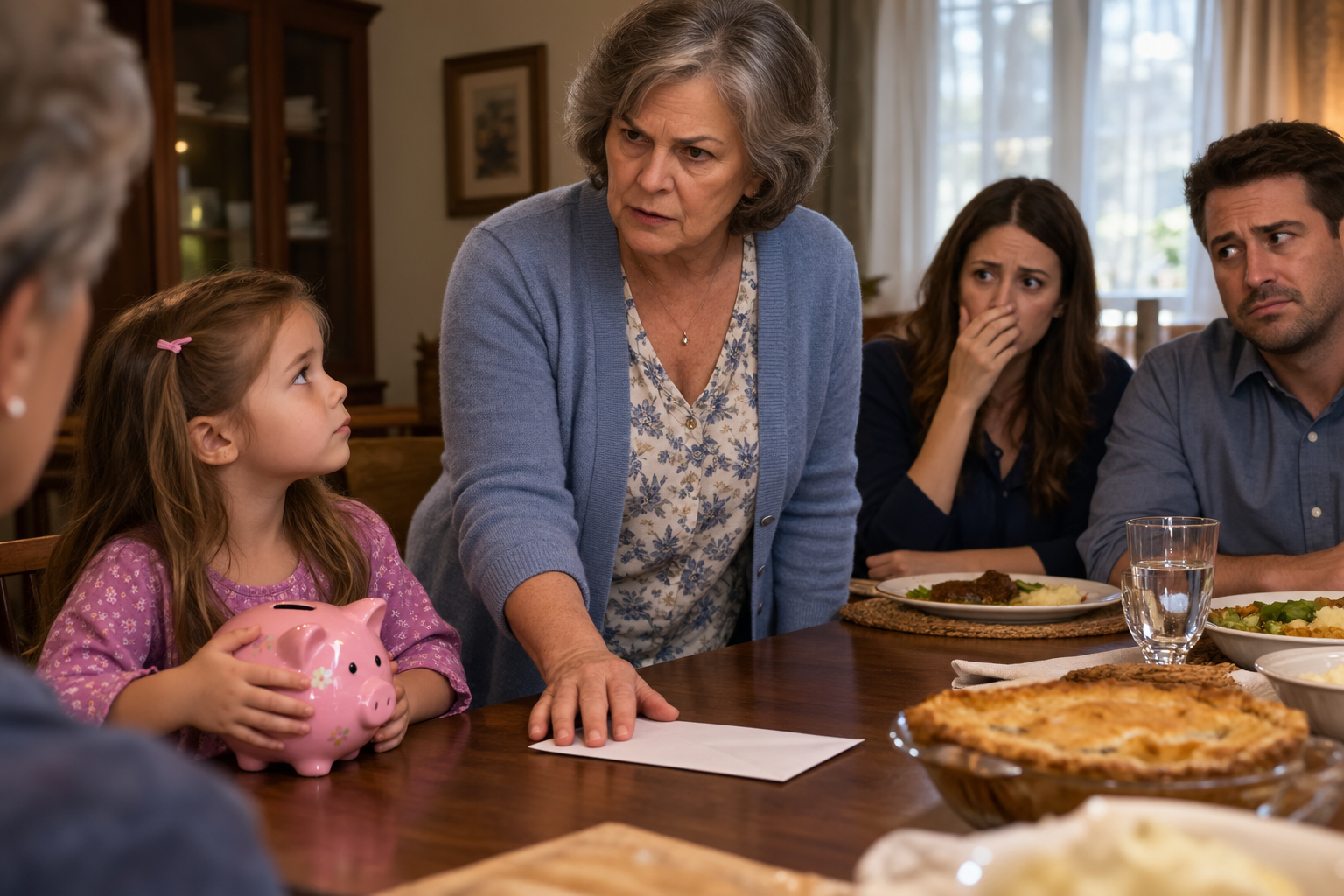
A Six-Year-Old Asked One Innocent Question About My Worth, and Before Dinner Was Over, I Realized Someone Had Been Keeping Count
Part 12 of 20

