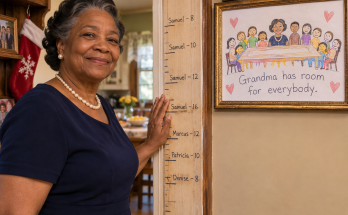
By the time Lily turned nine, Derek had become a familiar part of her weekends again.
Not the man he had been before.
Something quieter.
He took her to the library.
He helped with science projects.
He attended school concerts.
He learned which foods she hated and stopped packing them.
He remembered her birthday without being reminded.
Those things mattered.
But they did not erase the past.
Emily understood that better than anyone.
One Sunday afternoon, she came to my house carrying a stack of papers.
“I signed the final agreement.”
I looked up.
“With Derek?”
She nodded.
“He's almost finished paying everything back.”
“How much remains?”
“Nothing after next month.”
I smiled.
“That must feel good.”
“It does.”
She sat down.
“But I thought I'd feel something bigger.”
“Like what?”
“Relief.”
“You do.”
“I guess.”
She rubbed the edge of one paper.
“I thought I'd feel victorious.”
“You don't need to.”
“I know.”
She looked toward the garden.
“I think I finally stopped wanting him to hurt.”
“That is different from wanting him back.”
Her eyes lifted.
“Yes.”
She laughed softly.
“I don't want him back.”
I nodded.
“But I don't hate him.”
“That is allowed.”
“Everything seems to be allowed now.”
“That's what happens when you stop living by somebody else's rules.”
She smiled.
Lily came into the kitchen carrying a broken model airplane.
“Nana, can you fix this?”
“Let me see.”
She handed it to me.
A small wing had snapped off.
I examined it.
“I think your dad can fix this better.”
She frowned.
“Why?”
“Because he likes building things.”
She thought about that.
“Okay.”
Then she ran outside to call him.
Emily watched her go.
“You really don't mind.”
“Mind what?”
“Her calling him.”
“No.”
“Even after everything?”
“Especially after everything.”
She nodded.
“Why especially?”
“Because I don't want what he did to become the center of her childhood.”
Emily looked down.
“I never thought of it that way.”
“It shouldn't become her inheritance.”
That sentence stayed with her.
Later that month, Lily asked whether she could spend the weekend with Derek.
Emily agreed.
It was the first overnight visit since the divorce.
The night before, Emily called me.
“I keep thinking something will go wrong.”
“What?”
“I don't know.”
“Then tell yourself what you know.”
She was quiet.
“What do I know?”
“Your daughter wants to go. Her father has shown consistent behavior for years. You have boundaries. He knows them.”
“That's true.”
“You don't have to be fearless.”
“I wish I could be.”
“You don't need to be.”
The weekend passed without incident.
Lily returned Sunday afternoon carrying a paper bag.
“What did you bring?”
She opened it.
A terrible-looking wooden birdhouse.
“I made it with Dad.”
I examined the crooked roof.
“It has character.”
“It fell apart twice.”
“Then it has even more character.”
She laughed.
Emily came in behind her.
She looked calmer.
“I survived.”
I smiled.
“So did Lily.”
“Yes.”
Derek had apparently called Emily during the weekend to ask permission before taking Lily somewhere.
That small courtesy meant more than he probably understood.
He was learning not to assume access.
That had been the original wound.
He had assumed.
Now he asked.
Years passed in small pieces.
Lily learned to ride a bicycle.
Then she learned to drive.
She stopped wanting tomato sandwiches.
She started drinking coffee.
She grew taller than me.
Every change felt both ordinary and impossible.
One spring evening, she came to my house wearing her high school graduation gown for the first time.
“Too much?”
“No.”
She stood in front of the mirror.
“It looks weird.”
“It looks like you.”
She turned.
“Mom cried.”
“Of course she did.”
“Dad did too.”
“Of course he did.”
She smiled.
Then she sat beside me.
“Nana?”
“Yes?”
“Do you remember when I asked how much you cost?”
I laughed.
“I remember very clearly.”
“I was stupid.”
“You were six.”
“Still.”
“No.”
She leaned against me.
“I think about that question sometimes.”
“Why?”
“Because I thought everything had a number.”
“Most children do.”
“I don't anymore.”
“What changed?”
She looked at me.
“You.”
I shook my head.
“No.”
“Yes.”
She took my hand.
“You showed me that someone can give you everything and still say no.”
I looked at her.
“That lesson cost me less than you think.”
She smiled.
“Still counts.”
At graduation, Derek sat several rows behind us.
Emily sat beside me.
When Lily walked across the stage, all three of us stood.
She looked toward the audience.
Her eyes found us.
For a moment, she smiled.
Then she received her diploma.
Afterward, Derek approached me.
“She did it.”
“Yes.”
“You must be proud.”
“Very.”
He nodded.
“I still think about what you said.”
“What?”
“That I stole your name, not your labor.”
I looked at him.
“I remember.”
“I finally understand it.”
I believed him.
“What do you understand?”
“That I thought because you gave freely, I had some right to decide what your giving was worth.”
I nodded.
“That was it.”
“I was wrong.”
“Yes.”
He looked toward Lily.
“I wish I'd learned it before I hurt everyone.”
“So do I.”
He swallowed.
“I'm sorry.”
I didn't say the words he probably wanted.
I didn't say, “It's okay.”
Because it wasn't.
Instead I said, “Thank you for understanding.”
He nodded.
That was enough.
Later that night, Emily and I sat together in the empty kitchen.
“She changed him,” Emily said.
“Maybe.”
“You changed her.”
“I loved her.”
Emily smiled.
“Same thing.”
I shook my head.
“No.”
“What then?”
“Loving someone doesn't mean shaping them.”
She considered that.
“Maybe it means giving them room to become themselves.”
“Yes.”
We sat quietly.
The house had become very still.
Lily had gone out with friends.
Derek had left.
Emily looked around.
“It feels strange.”
“What does?”
“Our little girl is grown.”
I smiled.
“She isn't little anymore.”
“No.”
“But she's still ours.”
Emily nodded.
“Always.”
The next morning, Lily called me from college.
She had gotten accepted into the program she wanted.
She was terrified.
Excited.
Unable to decide whether to laugh or cry.
“I'm scared,” she admitted.
“Good.”
“Good?”
“It means you care.”
“What if I fail?”
“Then you learn.”
“What if I disappoint everyone?”
“You won't.”
“How do you know?”
“Because you learned something your father and I both had to learn the hard way.”
“What?”
“That your value doesn't depend on whether someone else approves of you.”
She went quiet.
Then she said, “I wrote that down.”
“Good.”
“Can I ask you something else?”
“Always.”
“Do you think I owe you?”
I smiled.
“No.”
“Nothing?”
“Nothing.”
“That doesn't seem fair.”
“It is.”
She laughed.
“Then I'm going to owe you nothing forever.”
“That sounds perfect.”
We talked for another hour.
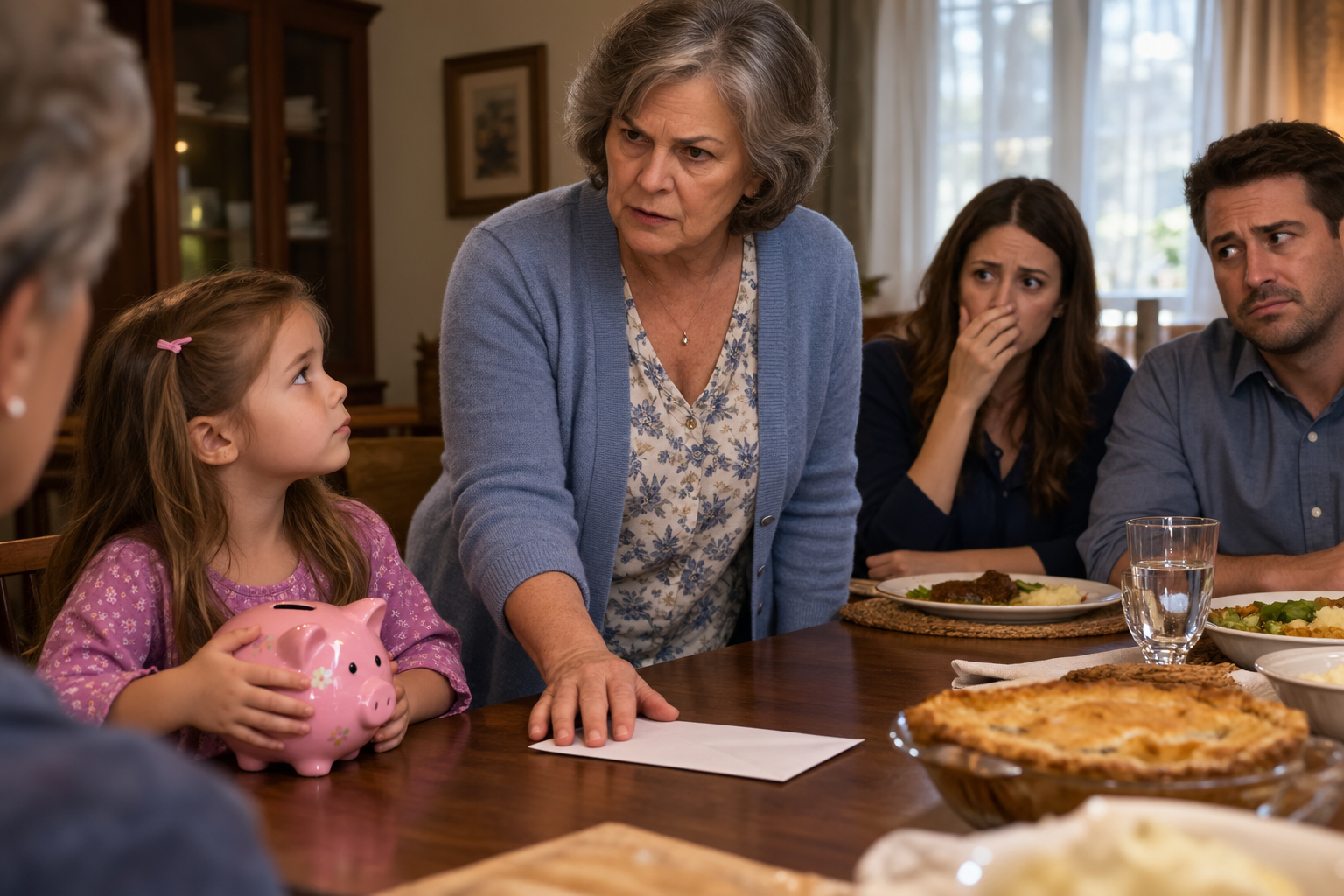
When we hung up, I looked at the little pink piggy bank still sitting on my shelf.
It had been empty for years.
I kept it anyway.
Not because it represented money.
Because it represented the first question.
How much do you cost?
The answer had taken a lifetime to explain.
Click here to continue reading: PART 11: When Lily Left for College, the Quiet House Made Me Finally See What the Receipts Had Taken From Us—and What They Never Could
A Six-Year-Old Asked One Innocent Question About My Worth, and Before Dinner Was Over, I Realized Someone Had Been Keeping Count
Part 10 of 20