
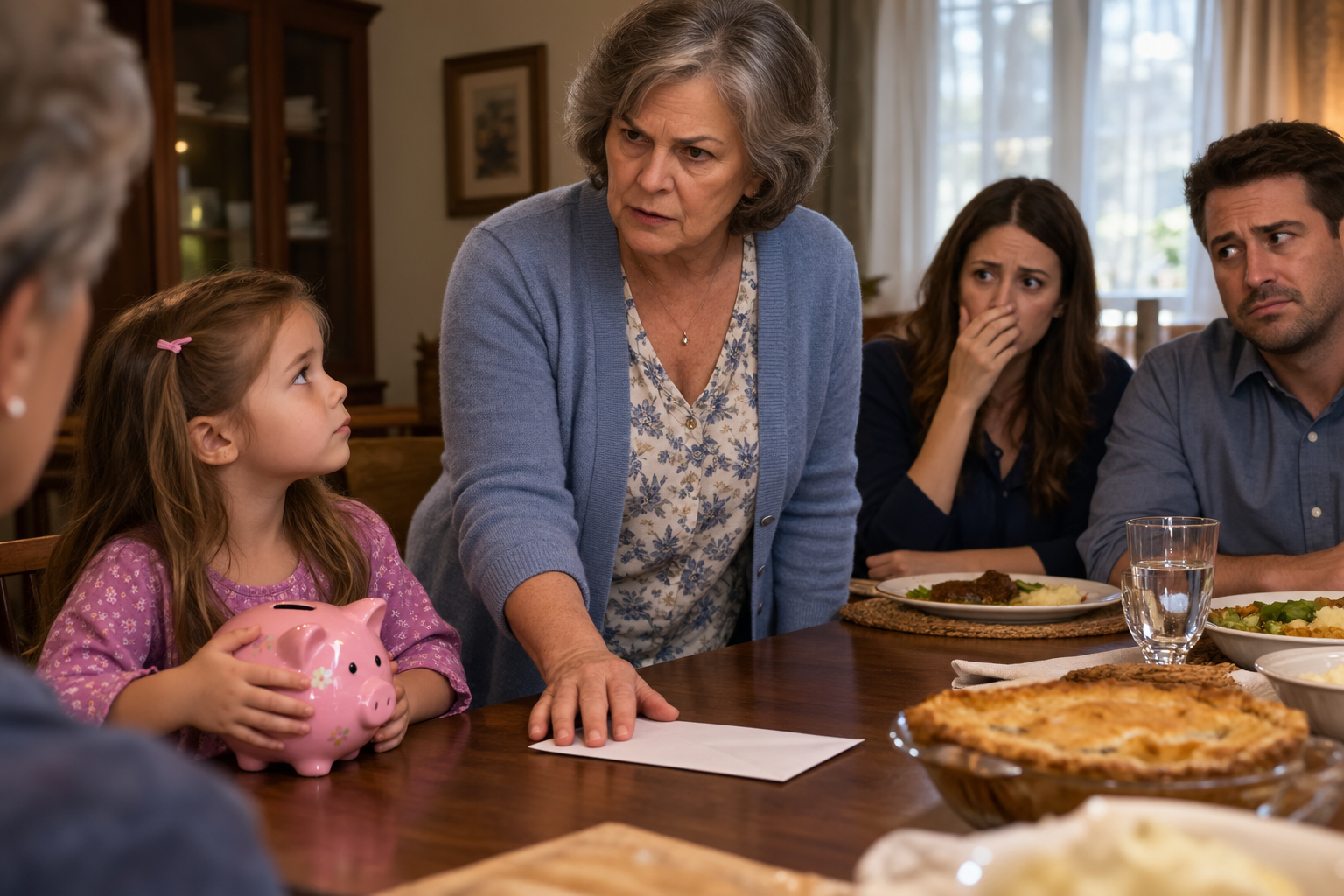
The first year of the Nana Fund was harder than Lily expected.
She had imagined that once the paperwork was finished, the money would simply find the right people.
Instead, there were applications to review, questions about eligibility, receipts to verify, letters to answer, and long evenings when she sat at my kitchen table with a calculator and a stack of forms.
“You made this sound easy,” Daniel told her one night.
“I didn't.”
“You said, ‘We'll just help people.’”
“I meant it.”
He looked at the pile.
“This is what helping looks like?”
“Sometimes.”
I watched them from the stove.
They were learning the same lesson everyone eventually learned when an idea became real.
Good intentions were only the beginning.
The first five hundred dollars had been simple.
The next ten thousand were not.
People began hearing about the fund through friends.
Then through community organizations.
Then through a local newspaper article Lily hadn't known was being written.
One morning, she arrived at my house waving a printed page.
“Nana.”
“What?”
“We're in the paper.”
I dried my hands.
“Why?”
She handed me the article.
The headline mentioned a young woman creating a fund in honor of the grandmother who had cared for her.
I read the first paragraph.
Then the second.
Then I stopped.
“They got my age wrong.”
Lily laughed.
“That's what you're worried about?”
“Yes.”
“You're impossible.”
I continued reading.
The article described the original dispute without naming every detail.
It mentioned the forged records.
The money.
The divorce.
Then it explained what had come afterward.
The scholarship.
The first recipient.
The growing fund.
I looked at Lily.
“You didn't tell them everything.”
“No.”
“Good.”
“Why?”
“Because some parts of a person's life don't belong in a newspaper.”
She nodded.
“I told them what mattered.”
“What did you tell them?”
“That you taught me care has value without turning care into a transaction.”
I folded the newspaper.
“That sounds much more elegant than anything I said.”
“You said it in a kitchen.”
“That's where I do my best work.”
She laughed.
The article brought more donations.
Some were small.
Twenty dollars.
Fifty.
A hundred.
One woman sent twelve dollars and a handwritten note.
Lily read it aloud.
“She says twelve dollars is all she could spare.”
“That's generous.”
“She wants us to know she remembers being helped when she was younger.”
I nodded.
“Put her letter in the notebook.”
“Why?”
“Because the amount isn't the important part.”
Lily smiled.
“You really hate numbers.”
“I don't hate numbers.”
“You hate what people do with them.”
“That is more accurate.”
The fund eventually reached ten thousand dollars.
Then twenty.
Then fifty.
The numbers became difficult to comprehend.
Lily kept a spreadsheet.
Daniel helped with bookkeeping.
Emily helped review applications.
Michael handled some of the legal questions.
Even Derek found ways to contribute.
He never asked for recognition.
He simply transferred money when he could.
One evening, Lily noticed his name on the donation list.
“Dad gave another five thousand.”
I looked up.
“Good.”
“He refuses to let me thank him.”
“Then don't.”
“Why?”
“Because giving can become uncomfortable when the person giving needs forgiveness in return.”
She understood immediately.
“Right.”
Derek's contributions remained anonymous.
That mattered to him.
It mattered to me too.
A year after the fund began, we received a letter from a woman named Rosa.
She was caring for her mother while working nights.
She had applied for a grant to complete a bookkeeping course.
Her letter was four pages long.
She described falling asleep at her kitchen table.
She described missing work because her mother had a medical appointment.
She described keeping every dollar in separate envelopes because she was afraid one unexpected expense would leave them without groceries.
Then she wrote one sentence that stayed with me.
I thought caring for my family meant I had to disappear.
Lily read that sentence twice.
Then she looked at me.
“That sounds like what you said.”
“Yes.”
“What do we do?”
“We help.”
Rosa received the grant.
Six months later, she sent another letter.
She had completed the course.
She had been offered a better job.
She was still caring for her mother.
But now she had savings.
She had a plan.
She had something that belonged to her.
Lily cried when she read it.
“I don't know why this gets me.”
“You understand her.”
“Maybe.”
“You don't have to understand everything to care.”
She folded the letter.
“I want to meet her.”
“You can ask.”
Rosa agreed.
They met at a small café.
I went too.
Rosa was younger than I expected.
She had tired eyes and a careful smile.
When she saw me, she stood.
“You're Nana?”
I laughed.
“Apparently.”
She hugged me before I could react.
“Thank you.”
I held her shoulders.
“You did the work.”
“But you gave me the chance.”
Lily smiled.
Rosa sat down.
“I almost didn't apply.”
“Why?”
“I thought other people needed it more.”
I looked at her.
“Don't do that.”
She blinked.
“What?”
“Don't make yourself disappear because somebody else is struggling.”
She looked down.
“I've done that for years.”
“I know.”
She smiled.
“I'll try not to.”
That meeting changed the fund.
Lily realized the grants couldn't simply be about money.
They had to help people reclaim time, skills, confidence, and choices.
The fund began paying for certification courses.
Childcare during classes.
Transportation.
Work equipment.
Small things that could change the direction of a person's life.
The amounts weren't always large.
But the purpose was.
One night, Lily asked me whether I thought the fund had become too big.
“How big is too big?”
“Big enough that I don't know every recipient.”
“That happened a long time ago.”
“I know.”
“Does that bother you?”
“A little.”
“Why?”
“Because it started with us.”
I smiled.
“No.”
She looked confused.
“It started with you.”
She shook her head.
“With me?”
“Yes.”
“You were the one who asked the question.”
She looked down.
“I was six.”
“Exactly.”
She laughed.
“Six-year-old me started a foundation?”
“Don't get carried away.”
We both laughed.
Then she became quiet.
“I think I understand.”
“What?”
“Maybe the story isn't supposed to stay ours.”
I nodded.
“That's what happens when people learn from something.”
The following summer, the fund awarded its first ten grants at once.
We held a small gathering in a community hall.
Nothing fancy.
Folding chairs.
Coffee in paper cups.
A table covered with homemade food.
Recipients stood one by one.
Some spoke.
Some couldn't.
One woman simply hugged Lily.
Another handed me a card.
I opened it later.
Inside she had written:
Thank you for seeing the person behind the responsibility.
I kept that card.
At the end of the evening, Lily stood beside me.
“I didn't expect this.”
“Neither did I.”
“Do you think Dad would have believed this was possible?”
I looked across the room.
Derek was talking with Daniel.
“I don't know.”
“Would you?”
“No.”
She smiled.
“Funny.”
“What?”
“The thing that started because somebody put a number on you ended up helping people get out from under numbers.”
I considered that.
“Yes.”
“That's kind of beautiful.”
“It is.”
She leaned against my shoulder.
“I'm proud of you.”
“I thought you were supposed to be proud of the fund.”
“I am.”
“Then why me?”
“Because you didn't let what happened make you bitter.”
I shook my head.
“I was bitter.”
“For a while.”
“Yes.”
“I'm glad you were.”
She looked surprised.
“Why?”
“Because it meant you understood that what happened mattered.”
I smiled.
“Being hurt doesn't make you weak.”
She nodded.
“But staying hurt forever isn't required either.”
That night, when everyone had gone, I returned home.
The house was quiet.
I opened my notebook.
The pages were filled now.
Rosa's letter.
The first grant.
The newspaper article.
Lily's notes.
Photographs.
Receipts from the fund.
And beneath everything, the original question.
How much do you cost?
I stared at it.
Then I turned the page.
The answer had changed again.
It was no longer simply that I was priceless.
It was that my value had never needed to be calculated in the first place.
And neither did anyone else's.
Click here to continue reading: PART 18: A Problem Inside the Fund Threatened Everything Lily Had Built, and This Time She Had to Choose Between Protecting Its Reputation and Telling the Truth
A Six-Year-Old Asked One Innocent Question About My Worth, and Before Dinner Was Over, I Realized Someone Had Been Keeping Count
Part 17 of 20

