The house became quiet after Lily left for college.
Not immediately.
At first, Emily came over every Sunday.
She brought groceries.
Derek called.
Lily sent photographs.
There were packages, messages, missed calls, and long conversations about classes, roommates, and whether the dining hall food was actually edible.
Then winter came.
The calls became shorter.
The packages became less frequent.
Life moved forward.
I didn't resent it.
That was what children were supposed to do.
Leave.
Grow.
Build lives you weren't inside.
Still, there were mornings when I walked into the kitchen and automatically reached for a second plate.
Then I would stop.
The chair remained empty.
One Sunday, Emily came over with an old cardboard box.
“I found this in storage.”
She put it on the table.
I knew what was inside before she opened it.
The old reimbursement papers.
Forty-eight months.
I stared at them.
“I thought you threw those away.”
“I couldn't.”
She sat down.
“Neither could I.”
We opened the box together.
The forms were yellowing.
The signatures looked even more artificial now.
I remembered how frightened I had been when I first saw them.
Emily touched one page.
“I hate these.”
“So do I.”
“Do you ever wish it never happened?”
“Yes.”
She nodded.
“Me too.”
“But if it hadn't happened?”
She looked at me.
“I wouldn't have left.”
I knew what she meant.
“If Derek hadn't been caught, I might still be married to him.”
“Yes.”
“And Lily might have grown up thinking what he did was normal.”
I closed the box.
“That would have been worse.”
She nodded.
Sometimes the worst thing that happens to you is also the thing that finally forces you to stop accepting something that was slowly hurting you.
It doesn't make the hurt good.
It simply means you can build something from it.
A few days later, Carla called.
She had retired.
She was moving closer to her daughter.
“I wanted to say goodbye,” she told me.
“Goodbye?”
“I'm leaving town.”
We arranged lunch.
She looked older.
So did I.
Neither of us mentioned the reimbursement forms until dessert.
“I still have nightmares about that box,” she said.
I smiled.
“I don't.”
“Really?”
“No.”
“When did that change?”
I thought about it.
“When Lily stopped talking about money.”
Carla smiled.
“That makes sense.”
“She turned it into something else.”
“What?”
“A lesson.”
Carla nodded.
“I think that's what I did too.”
She reached into her purse.
“I brought you something.”
It was a small notebook.
I opened it.
Inside were blank pages.
“I thought you might write.”
“I'm not much of a writer.”
“You taught children for thirty years. You can write.”
I laughed.
“You've been listening to Lily.”
“She's wise.”
“She is.”
I put the notebook in my bag.
Before we left, Carla touched my hand.
“I never thanked you properly.”
“You did.”
“I still feel I owe you.”
I smiled.
“You don't.”
She looked at me.
“Are you sure?”
“Yes.”
That was the thing I had finally learned.
Not every kindness needs repayment.
Not every wrong requires revenge.
Sometimes the most complete ending is simply refusing to let the original transaction define you.
That summer, Derek sent Emily a message.
He had remarried.
He wanted to know whether she would be comfortable attending a family dinner for Lily's birthday.
Emily showed me the message.
“What do you think?”
“I think you should decide.”
“What would you do?”
“Go if you want to.”
She stared at the screen.
“I think I do.”
So she went.
I didn't.
It wasn't necessary.
Lily was twenty by then.
Old enough to understand that her parents could occupy the same room without pretending they were still married.
The dinner went well.
Emily came home laughing.
“You know what?”
“What?”
“Derek's wife is lovely.”
I smiled.
“Good.”
“She asked about you.”
“Why?”
“She heard the story.”
I raised an eyebrow.
“What story?”
Emily laughed.
“You know.”
I shook my head.
“Apparently everyone knows.”
“Apparently.”
Then she became serious.
“She said something interesting.”
“What?”
“She said you taught Lily boundaries better than anyone she knew.”
I smiled.
“That sounds like Lily.”
Emily nodded.
“She said Lily talks about you all the time.”
“I know.”
“Not just the childcare thing.”
“Good.”
“She talks about the garden.”
“That sounds better.”
“She talks about the sandwiches.”
“That sounds worse.”
Emily laughed.
Then she hugged me.
“Thank you.”
“For what?”
“For helping me raise her.”
I held her tightly.
“You did the raising.”
“We did.”
“No.”
She pulled back.
“You always do this.”
“Do what?”
“Give everyone else credit.”
I smiled.
“Maybe that's another lesson you need to learn.”
“What?”
“You can accept love without paying it back.”
She went quiet.
Then nodded.
“I'll work on it.”
The next spring, Lily came home from college with a boyfriend.
His name was Daniel.
He was polite.
Nervous.
He shook my hand too firmly.
I liked him immediately.
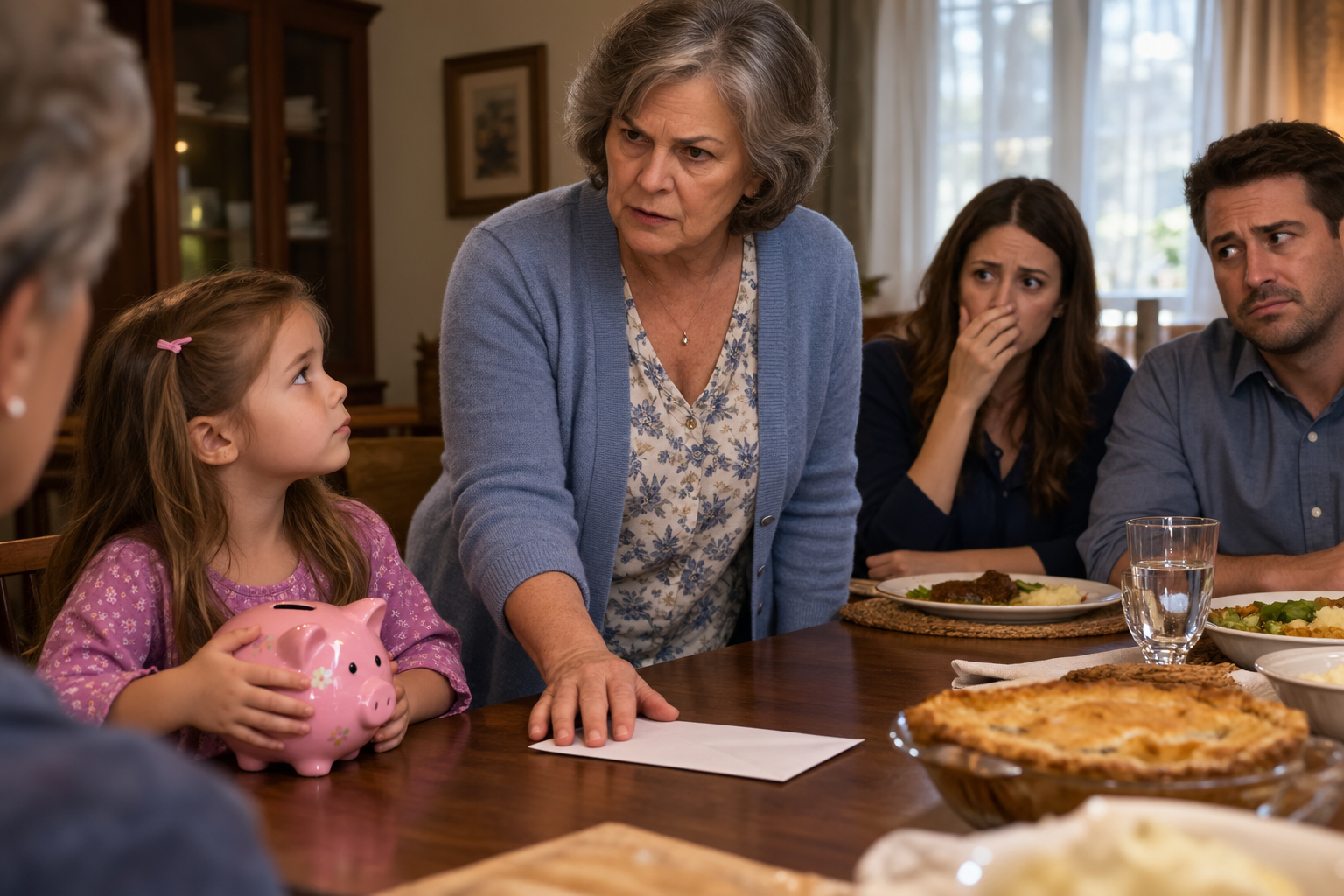
During dinner, Lily noticed the old pink piggy bank on my shelf.
“You still have that?”
“Yes.”
Daniel looked confused.
“What's that?”
Lily laughed.
“Oh, that's a long story.”
She told him.
Not every detail.
Just enough.
When she finished, Daniel looked at me.
“So your son-in-law stole money by pretending you were a paid caregiver?”
“Yes.”
“And you still talk to him?”
“Sometimes.”
He looked surprised.
“Why?”
I smiled.
“Because life is more complicated than villains and heroes.”
Daniel nodded slowly.
Lily reached for his hand.
“That's what she taught me.”
I looked at them.
Young.
Uncertain.
Building something.
I hoped they would learn the same lesson without needing a forged signature to teach it.
After dinner, Lily helped me wash dishes.
“I like him,” I said.
“I know.”
“You're happy?”
“Yes.”
“Then I'm happy.”
She smiled.
“That's all?”
“That's all.”
She dried a plate.
“Do you think he knows about boundaries?”
“Ask him.”
She laughed.
“I already did.”
“What did he say?”
“He said he thought they were walls.”
“And?”
“I told him they're doors.”
I stopped drying the plate.
“That's good.”
“I learned from you.”
“No.”
She smiled.
“You did.”
That night, after everyone left, I sat alone at the kitchen table.
The old box was still in the closet.
The pink piggy bank was on the shelf.
The notebook Carla had given me was beside the lamp.
I opened it.
On the first page, I wrote:
The things I thought I lost.
Then I stopped.
Because the answer came immediately.
I had not lost my daughter.
I had not lost my granddaughter.
I had not lost my ability to love.
I had not lost my voice.
I had not lost my worth.
Someone had tried to put a price on my generosity.
They had failed.
I closed the notebook.
Outside, the garden was beginning to bloom.
The house was quiet.
But it no longer felt empty.
It felt lived in.
Click here to continue reading: PART 12: Years After the Forged Forms Disappeared Into a File Box, Lily Asked Me to Explain the Difference Between Being Needed and Being Loved
A Six-Year-Old Asked One Innocent Question About My Worth, and Before Dinner Was Over, I Realized Someone Had Been Keeping Count
Part 11 of 20